When it comes to making your home stand out, architecture is key, but smart lighting can truly elevate the look. With the right lighting, those unique details on your home can take center stage, giving your exterior a whole new vibe once the sun sets. And the best part? You won’t need to break the bank—just a few thoughtful lighting choices can do wonders.
Lighting isn’t just about turning on a switch; it’s about setting the tone, adding dimension, and drawing attention where it matters. Whether you’re using subtle uplights to create a dramatic effect or soft accents to highlight texture, the possibilities are endless.
With some creativity and the right approach, you can make your home look stunning while keeping the ambiance warm and welcoming.
The Importance of Lighting in Highlighting Your Home’s Exterior

Lighting is one of the most effective ways to make your home’s exterior shine, no matter the time of day. It does more than just brighten up your space—it helps highlight the architectural details that give your home its unique character. Here’s why outdoor lighting plays such an important role in showcasing your home:
- Creates a Focal Point: The right lighting draws attention to standout features, ensuring they don’t get lost in the shadows once night falls.
- Enhances Curb Appeal: A thoughtfully lit exterior adds an instant boost to your home’s overall charm, making it look polished without requiring major changes.
- Adds Depth and Texture: By layering different types of lighting, you can create depth that makes your home feel more visually interesting and inviting.
- Increases Safety and Security: Beyond aesthetics, lighting helps keep pathways well-lit and deters unwanted visitors by illuminating darker areas around your home.
- Sets the Mood: Whether you want a soft, warm glow or a bold, dramatic effect, lighting allows you to control the ambiance with ease.
Assessing Your Home’s Architectural Features

Before diving into the fun part of highlighting your home with lighting, it’s essential to first take a closer look at your home’s architecture. By understanding which elements stand out, you’ll be better equipped to make lighting decisions that truly enhance your exterior. Here are a few things to keep in mind when assessing your home’s design:
- Pinpoint Architectural Highlights: Identify key features like columns, arches, or interesting textures that naturally draw attention and could benefit from some extra lighting love.
- Match the Lighting to Your Home’s Style: Whether your home is sleek and modern or classic and traditional, the architectural style will guide the type of lighting that will complement it best.
- Think About the Overall Layout: Consider how the different sections of your home fit together, and how strategic lighting can create a sense of balance and cohesion across the exterior.
- Pay Attention to Materials: Materials like brick, stone, or wood have their own unique reactions to light, so understanding how they interact with lighting can help bring out their natural beauty.
Now that you’ve got a good understanding of what makes your home’s architecture unique, it’s time to explore creative ways to use outdoor lighting to accentuate those standout features.
1. Using Uplighting to Accentuate Columns, Pillars, and Walls

Uplighting is one of the easiest and most impactful ways to highlight your home’s architecture. It’s especially effective for columns, pillars, and large walls, adding a sense of drama and elegance by naturally drawing the eye upward.
By positioning lights at the base and angling them upward, you can create the illusion of height, making your home feel grander. This technique works beautifully at night, bringing out the depth and texture of surfaces that might otherwise go unnoticed.
When used on walls, uplighting enhances materials like stone, brick, or stucco, making their textures stand out. It’s an understated way to showcase the craftsmanship of your home without overpowering the rest of the design.
The secret to nailing uplighting is finding the right balance between brightness and placement. Too much light can feel harsh and uninviting, while too little might not achieve the effect you’re aiming for.
Here are a few tips to make the most out of uplighting for columns, pillars, and walls:
- Position Lights at an Angle: Aiming the lights slightly upward creates a soft, flattering glow that enhances height without casting harsh shadows.
- Opt for Warm Light: Warm white or amber lights add a cozy, inviting feel, especially when highlighting textured surfaces.
- Use Multiple Lights: For larger features, several uplights ensure even coverage, preventing any dark patches from disrupting the look.
- Control Brightness: Dimmable or adjustable lights let you fine-tune the intensity, giving you flexibility to create the perfect atmosphere.
2. Illuminating Rooflines and Eaves

Enhancing your home’s rooflines and eaves with lighting is an excellent way to showcase its architectural style, especially after sunset. This lighting technique adds definition to the shape of your home, creating a clean, elegant silhouette that stands out.
By carefully positioning lights along the roof’s edge, you can bring attention to the structure in a way that feels both subtle and intentional. It’s particularly effective for homes with unique rooflines or intricate eaves that deserve a little extra attention in the evening.
A soft glow along the roofline not only highlights these features but also creates a warm, inviting atmosphere around your home. The beauty of this approach is that it doesn’t take much—just a few thoughtfully placed fixtures can work wonders.
The key is to find the right balance between subtlety and impact. You want the lighting to enhance your home’s architecture without taking away from its natural charm.
Here are some tips to make the most of roofline and eave lighting:
- Choose Sleek, Low-Profile Fixtures: Opt for outdoor lighting that blends seamlessly into the architecture while delivering just the right amount of illumination.
- Keep Lighting Evenly Spaced: Spacing lights evenly along the roofline creates a cohesive, well-balanced look.
- Select Warm or Soft White Light: These light tones add a welcoming glow that’s gentle and pleasing, without feeling too harsh.
- Focus on Key Details: Highlight areas where the roofline has unique angles, intersections, or changes in design to showcase your home’s distinctive features.
3. Highlighting Textured Surfaces and Materials

Lighting textured surfaces and materials can transform the look of your home’s exterior by highlighting their natural beauty. Whether it’s rugged stone, classic brick, or warm wood, the right lighting technique can really make those textures pop and add character to your home.
By casting light at a low angle, you can create shadows that emphasize the depth and detail of the material. This method, called grazing, works wonders on walls with unique textures or rough finishes, making them feel more dynamic and visually interesting.
Different materials respond differently to light, so choosing the right type is key. Warm lighting can give brick or wood a cozy, inviting feel, while cooler tones bring out the sleekness in stone or concrete surfaces.
The trick to getting this right is using just enough light to enhance the texture without overpowering it. A balanced approach creates a refined yet dramatic effect that draws attention without overwhelming the eye.
Here are some tips to make the most of lighting textured surfaces and materials:
- Place Lights Close to the Surface: This helps create rich shadows that bring out the depth and texture of the material.
- Opt for Warm or Neutral Light: Warm tones enhance the richness of wood and brick, while neutral light suits materials like stone or concrete.
- Play with Angles: Experiment with different angles to find the best way to highlight the texture and create interesting shadows.
- Keep It Subtle: A gentle touch goes a long way—too much light can flatten the texture and lose the effect you’re aiming for.
4. Accentuating Architectural Symmetry with Pathway Lighting

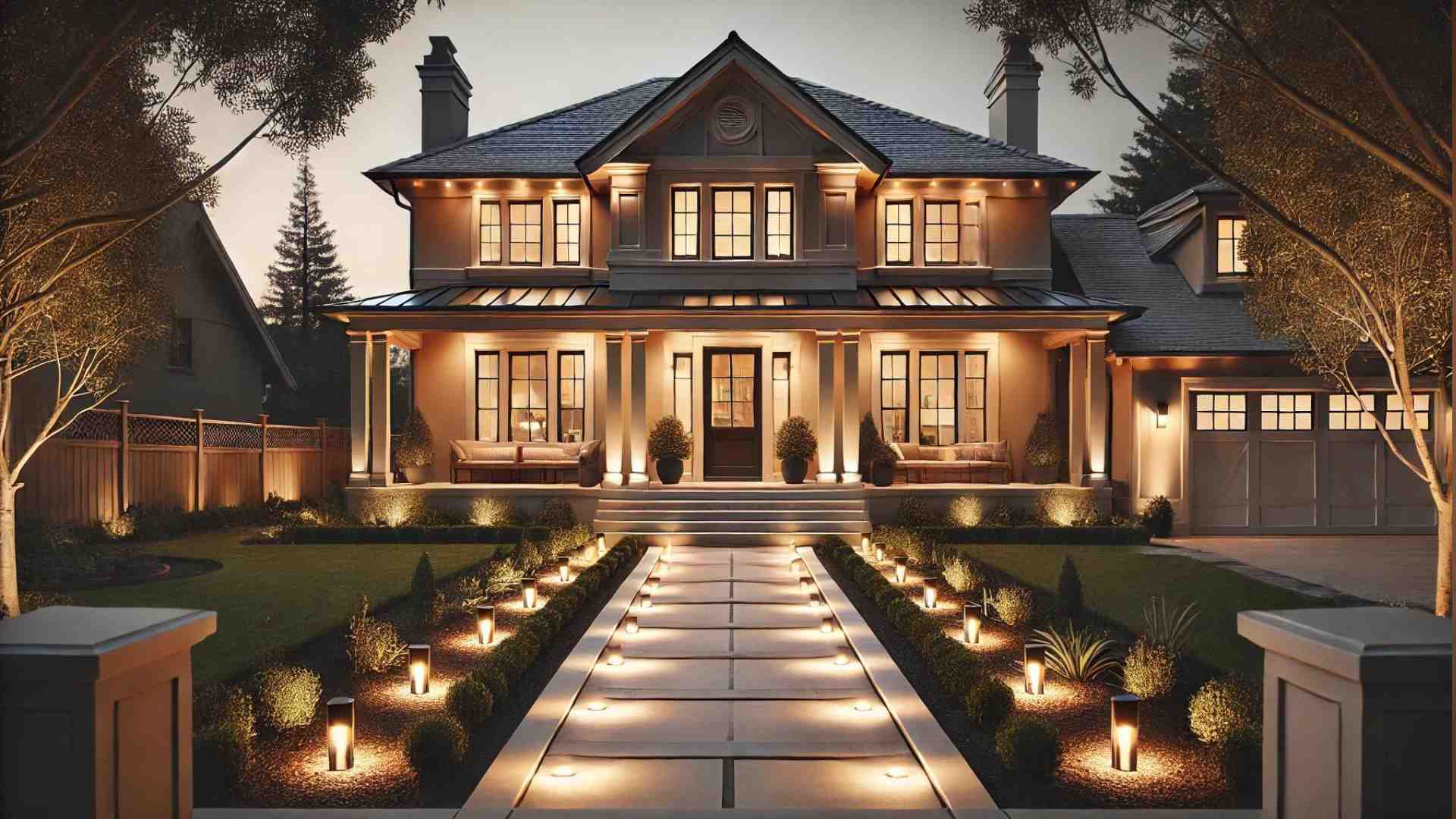
Pathway lighting is a great way to highlight the architectural symmetry of your home while adding both elegance and function. When done right, it creates a balanced and harmonious look that naturally draws attention to the clean lines of your home’s design.
Placing lights evenly on either side of the path not only illuminates the walkway but also enhances the symmetry of the facade, making everything feel more polished. Even the most straightforward home designs can benefit from this technique, adding a touch of sophistication.
Pathway lighting also brings out the best in your landscaping by subtly highlighting plants, garden beds, or decorative features along the way. This not only makes your path safer but also gives the entire outdoor area a warm, welcoming feel.
The secret to nailing this look is thoughtful placement, ensuring the lights are evenly spaced and positioned at the right height to softly illuminate the area without overpowering it. Done correctly, it transforms a simple pathway into a visually striking feature that enhances the overall architecture of your home.
Here are a few tips to make the most of pathway lighting:
- Choose Matching Fixtures: Symmetry is all about consistency, so opt for identical lighting fixtures on both sides of the path.
- Maintain Even Spacing: Make sure the distance between lights is equal to achieve a balanced and cohesive look.
- Opt for Soft, Warm Lighting: Warm lighting creates a cozy, inviting atmosphere without being too harsh or overwhelming.
- Highlight Surrounding Features: Ensure the pathway lights also accentuate nearby architectural or landscaping elements like columns or garden beds.
5. Incorporating Accent Lighting for Special Architectural Features
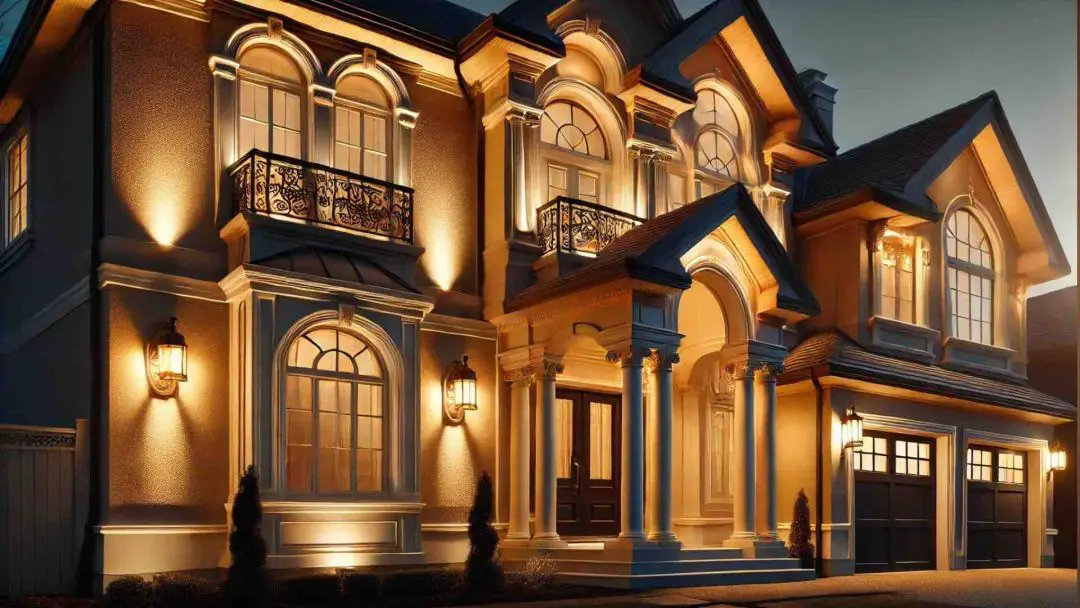
Accent lighting is an excellent tool for showcasing the unique architectural features that give your home its character. Whether it’s a charming archway, a detailed doorway, or an elegant balcony, lighting can help these features shine when the sun goes down.
Using spotlights or directional lighting allows you to highlight specific areas of your home without overwhelming the entire exterior. This approach creates focal points that add depth and interest, guiding the eye to the most intricate and beautiful aspects of your home’s design.
Accent lighting is especially effective for architectural elements that may go unnoticed during the day. At night, these features can take center stage, transforming even subtle details into striking visual highlights.
The key is careful placement—positioning the lights in a way that enhances the feature without creating unwanted shadows or overpowering the design. When done thoughtfully, accent lighting can elevate your home’s exterior in a way that feels both elegant and effortless.
Here are a few tips for making the most of accent lighting for architectural features:
- Highlight One Feature at a Time: Focusing on one or two elements keeps the lighting purposeful and prevents visual clutter.
- Use Directional Lighting: Spotlights or adjustable fixtures allow you to direct the light exactly where it’s needed, enhancing the feature without overdoing it.
- Opt for Warm Tones: Warm lighting adds a soft, welcoming glow that enhances architectural details.
- Adjust Brightness Levels: Dimmable outdoor lighting offers flexibility, letting you change the intensity depending on the time or occasion to keep the look fresh and inviting.
Let Your Home’s Architecture Shine with Outdoor Lighting

Outdoor lighting is an easy way to completely transform the look of your home after the sun goes down. Whether you’re highlighting architectural details or creating a welcoming glow, the right lighting adds depth and charm to your home’s design.
From uplighting to accent lights, there are plenty of ways to make your home stand out. The best part? You can give your home a fresh look without any big renovation projects.
So, whether you’re illuminating rooflines or spotlighting that unique garden feature, the possibilities are endless. With a bit of creativity and the right lighting, your home can truly shine both day and night!