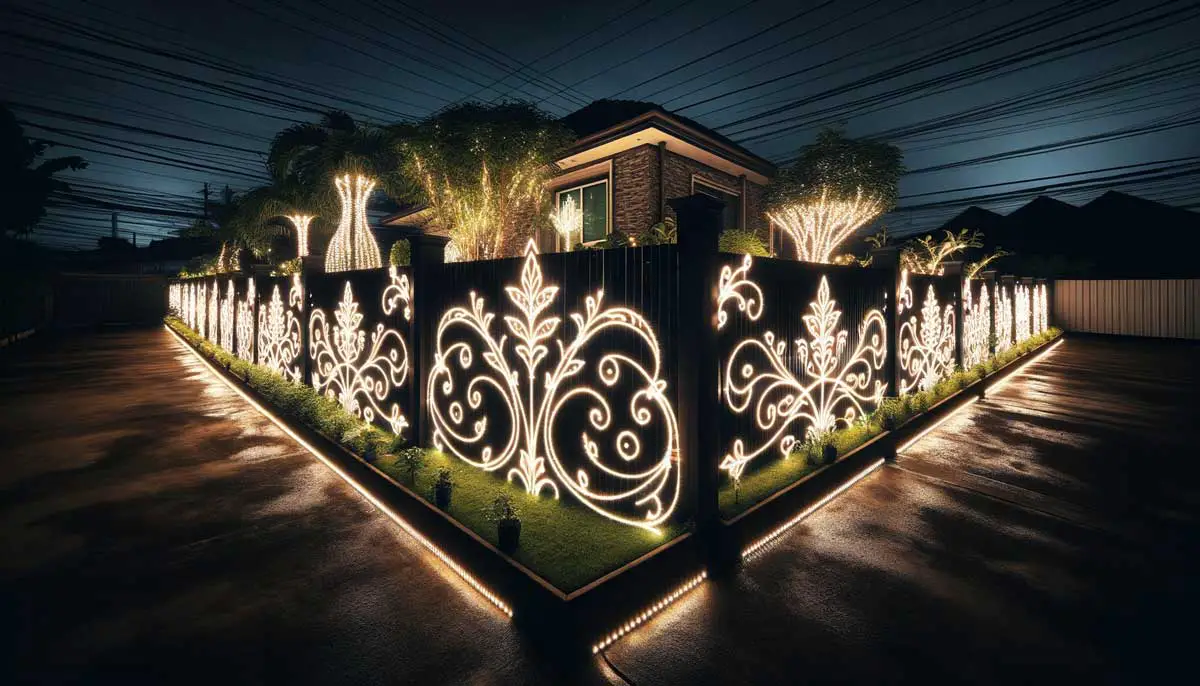
Smaller trees are often overlooked when homeowners think about upgrading their front or backyard landscapes. Yet, these plants are ideal for trying out fun outdoor lighting setups without breaking the bank or extra hassle.
You can forget about climbing high, unstable ladders just to reach the top branches. You get to stay safely on the grass while setting up your lights in a matter of minutes.
Today, in this article, we will go over six outdoor lighting ideas to make your shorter yard trees truly stand out after dark.
So, without further ado, let’s get started.
1. Spotlighting

Spotlighting is a classic technique where you aim a narrow beam of light straight at a specific feature or object. You place a single fixture on the ground a short distance from the base so the light focuses neatly on the object you want to highlight.
This setup works especially well for smaller trees since their shorter height lets the beam cover the canopy more evenly. You simply tilt the fixture upward and let the focused light reveal textures in the trunk and the colors in the leaves.
One big advantage of this outdoor lighting idea is the instant lift it gives to your front yard’s curb appeal. It also helps improve safety by lighting up nearby paths and making edges, steps, and transitions easier to notice when moving around the garden.
Homeowners who want a strong visual impact with minimal effort should consider this simple approach. If you’d like to give this idea a try, here are a few practical tips to keep in mind:
- Use an adjustable landscape spotlight so you can easily adjust the beam angle as the seasons change.
- Position the fixture behind low-growing shrubs to keep the hardware hidden during daytime.
- Clean the glass lens every few months to remove dirt, mud, and fallen leaves that can block the beam.
- Choose a bulb with a tight 15-degree to 25-degree spread to keep the light focused on the foliage.
- Use a low-wattage LED bulb to help protect delicate leaves from heat while keeping the effect controlled.
2. Shadowing

Shadowing is an artistic lighting technique where you project the shape of an object onto a nearby vertical surface like a wall or fence. You do this by placing a fixture on the ground in front of the object so its shadow is cast on the surface behind it.
This lighting idea works especially well for smaller trees because their fine branches create clearer, more detailed patterns when illuminated. And since they are smaller, the trees’ entire shadows can be clearly projected on a surface.
This technique is a great pick if you want something a bit more creative and new in your outdoor lighting plan. It works especially well when you have a clean wall, a simple fence, or even a garage door behind a decorative tree.
If you’d like to give this idea a try, here are some helpful tips to guide you:
- Use a fixture with an adjustable head so you can fine-tune the height of the projected image on the surface.
- Test the distance by moving the fixture closer or farther until the edges of the shadow appear sharp.
- Keep the background wall free from other light sources to maintain strong contrast and a clean shadow effect.
- Trim small dead twigs from the inner branches so the projected shape looks neat and well-defined.
3. Uplighting

If you prefer subtlety and elegance for your smaller trees, uplighting is perfect for you. It is an easily-achieved lighting technique that involves the aiming of light upward from a lower position like the ground.
Uplighting is ideal for smaller trees because their short height allows the light to accentuate not only their trunks but their branches and canopies as well.
Another major benefit of this outdoor lighting idea is how it gives shorter trees a stronger sense of height and presence. Uplighting is also one of the easiest ways to make these trees stand out while keeping the lighting in your yard subtle and gentle.
This idea is worth a try if you want to turn your shorter trees into a nighttime feature. Uplighting works particularly well with trees like Japanese maple, dwarf dogwood, or any compact species with dense, textured branching.
If you’d like to give this outdoor lighting technique a try, here are a few useful tips to consider:
- Angle the lens slightly toward the main trunk so both bark texture and lower branches are illuminated.
- Choose an LED bulb with a warm 2700K color temperature to enhance natural foliage tones.
- Clear away mulch, stones, and dirt from the fixture lens every few weeks to keep the light output consistent.
- Install a glare shield or shroud to prevent direct brightness from reaching the eyes of people walking nearby.
- Pair the fixture with a dimmer switch so brightness can be adjusted as the tree changes with the seasons.
4. Silhouetting

Smaller trees are usually full of character, and silhouetting is one lighting technique that can highlight those characters and make them stand out. This technique is achieved by placing a fixture behind an object and aiming the light toward a solid wall or fence as the backdrop. This creates a silhouette of the object against the illuminated surface behind, hence the name of this technique.
This lighting idea works especially well for smaller trees because it’s easy to light up the entire background surface while keeping the tree itself darker in front. That contrast makes the outline of branches stand out clearly, almost like a living shadow drawing on your wall.
One major advantage of this approach is how it turns simple landscaping into something that feels almost like an outdoor art piece. It also keeps its visual interest all year, even when the tree loses its leaves and the structure becomes more visible.
This is a strong choice if you want to make a plain fence or exterior wall feel more visually engaging. It works particularly well when ornamental trees are planted close to smooth surfaces that can act as a clean backdrop.
If you’d like to give this idea a try, here are a few tips to guide you:
- Use a wide-angle floodlight so the entire wall behind the tree gets an even wash of light.
- Place the fixture at ground level between the trunk and the background surface for a crisp silhouette.
- Choose a cool white LED bulb to create stronger contrast between the dark branches and lit wall.
- Trim small, messy twigs along the outer edges so the outline stays clear and easy to see.
- Reduce interference from nearby lights like streetlamps or porch fixtures so the front of the tree stays darker.
- Pick a low-profile fixture that stays hidden behind the trunk when viewed from main seating areas.
5. Wrapping Fairy Lights

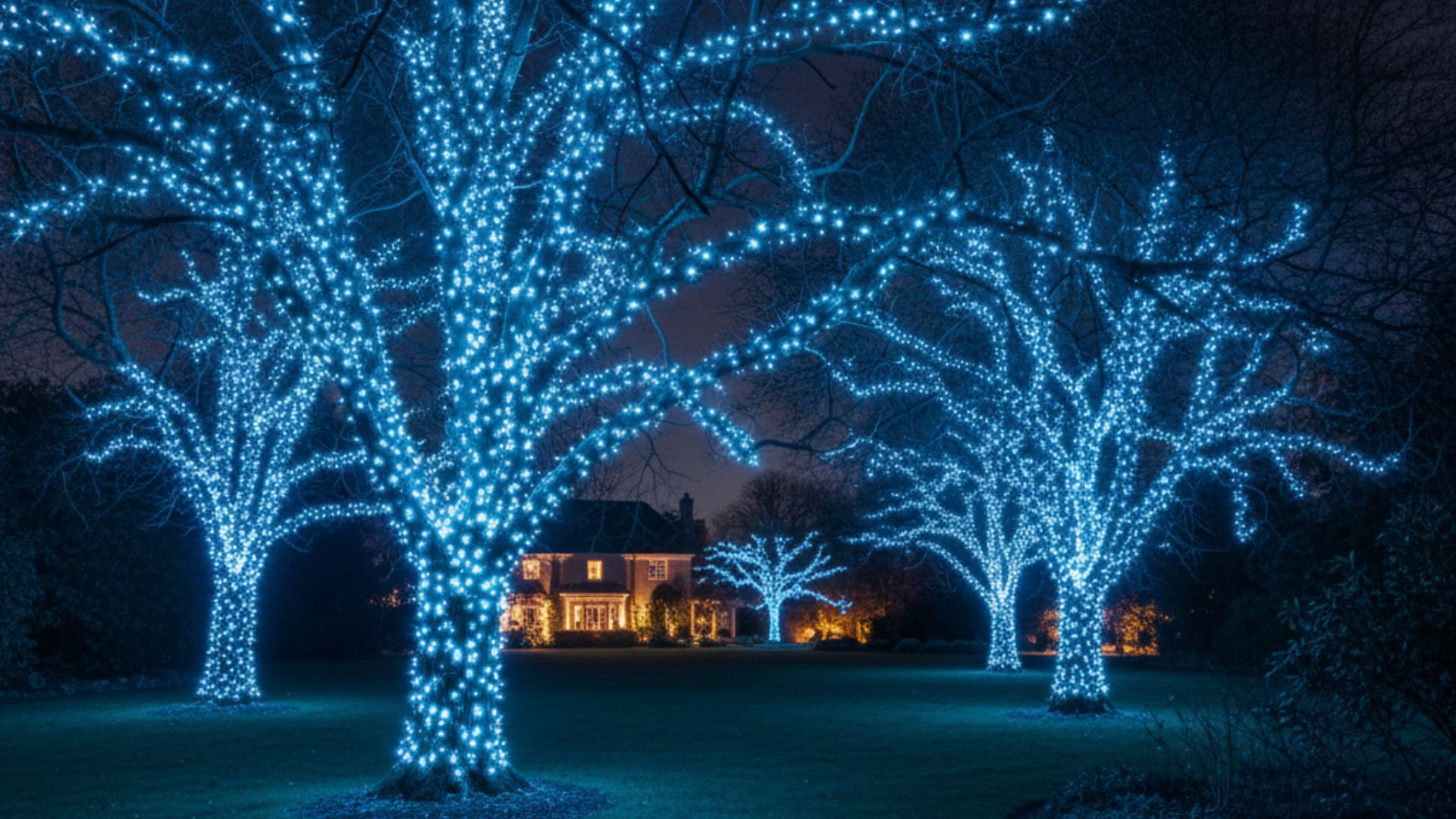
Wrapping fairy lights around a tree is a simple but effective way to add instant charm and a soft, inviting feel to your evening garden.
This idea is especially easy with smaller trees because their shorter height lets you reach every part of the trunk and main branches safely. You can achieve this by wrapping the lights around the base and working upward, wrapping the strands evenly so the tree’s outline stays visible and still well-defined.
The great thing about using fairy lights on smaller trees is how it instantly makes any outdoor space feel more lively and welcoming for gatherings or even for some quiet moment. It also provides steady ambient lighting that gently spreads across the nearby lawn and surrounding plants.
This is a great option if you want a cozy, slightly playful garden look that feels relaxed but still visually appealing. It works especially well for families who enjoy backyard get-togethers and want a lighting project that is simple and budget-friendly.
Here are a few practical tips to keep in mind if you’d like to give this outdoor lighting idea a try:
- Use commercial-grade, weather-resistant LED fairy lights with durable cords designed for outdoor use.
- Use commercial-grade, weather-resistant LED string lights with durable cords designed for outdoor use.
- Pick a wire color that closely matches the bark so the strands blend in during daytime.
- Leave a bit of slack while wrapping so the wires don’t press too tightly on growing branches.
- Secure the ends using soft rubber ties instead of metal fasteners to protect the bark.
6. Hang Lanterns

Hang lanterns directly from branches of your smaller trees, and you instantly add a bit of timeless charm to your evening garden setup.
This idea works especially well for smaller trees because their lower canopies keep the lanterns closer to eye level, making them more visible and visually engaging. You simply secure lightweight fixtures to main branches and let them hang at different heights so the arrangement feels more dynamic and interesting.
One great thing about this idea is how it turns your smaller trees into focal points at night. By adorning their branches with lanterns, you give these trees a chance to stand out and still serve a purpose even in the evening hours.
This idea is great for fans of lanterns who are looking for new ways to incorporate these fixtures into their outdoor setup. It also works well for renters or anyone who wants a simple installation that avoids digging or running complex wiring.
To make the most of this idea, here are a few tips to keep in mind:
- Choose solar-powered or battery-operated lanterns to avoid running extension cords through the canopy.
- Hang lanterns at different heights to create a layered, natural arrangement.
- Pick lightweight materials like durable plastic or thin aluminum to reduce stress on branches during windy conditions.
- Keep each lantern at least seven feet above ground level so people can walk comfortably underneath.
- Clean the casing panels occasionally with a damp cloth to remove dust, cobwebs, and insects.
Make Your Smaller Trees Shine with These Outdoor Lighting Ideas
Smaller trees may be modest in size, but they can carry a surprising amount of personality when you light them well. From spotlighting to lanterns, each idea in this article shows that even the smallest trees can hold their own in a nighttime garden.
The key is choosing the right approach for the look and function you want. Some methods highlight structure, others add charm or improve safety, and a few manage to do all three at once, which is always a nice bonus.
At the end of the day, it’s really about seeing small trees as design opportunities instead of background filler. Once you start lighting them with intention, they’ll stop feeling like they’re just sitting there and start feeling like they actually know they look good.