Outdoor wall lights usually get treated like a last-minute add-on, placed beside a back door only so nobody trips over the dog bowl after dark. But these fixtures can do much more than light up a small corner of your yard. When placed with a little thought, they can completely change how your home looks at night.
The problem is that many homeowners are not sure where these lights should go for the biggest impact. Large sections of a house often disappear into darkness after sunset, making the yard feel smaller and less interesting than it really is.
In this article, we’ll go over six smart spots for outdoor wall lights that can instantly improve your home’s safety, comfort, and nighttime style.
So without further ado, let’s get started.
1. Garden Walls

Garden walls are often treated like simple property markers, but they can become one of the most noticeable parts of your yard at night with the right lighting setup. A few well-placed wall lights can completely change how these walls look once the sun has set.
Without lighting, the edges of a yard usually disappear into darkness, which can make the whole area feel smaller and empty at night. Adding lights along garden walls helps define the space more clearly, making the yard feel wider and more connected from one end to the other. The soft glow also helps trees, plants, and landscaping stay visible instead of fading into shadows.
This effect becomes even stronger when the lights shine across textured materials like brick, concrete, or rough wood. The light creates natural shadows that highlight every crack, edge, and surface detail, giving the wall much more depth and character after dark.
To keep the lighting balanced, use downward-facing fixtures or slim wall sconces placed evenly across the surface. Keeping the lights lined up at the same height helps the entire yard look more organized and visually connected.
Here are some tips to guide you:
- Choose fixtures with an IP65 rating or higher so they can handle rain, dust, sprinklers, and everyday outdoor conditions without damage.
- Space fixtures about 6 to 8 feet apart to create smooth, even lighting without dark gaps or harsh bright spots.
- Use warm LED bulbs between 2700K and 3000K to create a softer nighttime glow that feels comfortable for people and less disruptive for nighttime wildlife.
2. Entryways

Your front door and front gate are some of the first things people notice about your home, especially at night. If these areas are left dark, the entire entrance can feel dull and hard to navigate. Adding wall lights around these entry points helps your home feel brighter, safer, and much more welcoming in the evening.
Wall lighting in these spots does more than improve appearance. It also makes everyday tasks easier, whether you are unlocking the door, walking up steps, or checking who is outside through a peephole or security camera.
Wall sconces work especially well near doors and gates because they naturally frame the entrance and guide attention toward it. The light falls exactly where people stand, which helps the area feel more comfortable and easier to use at night.
To keep everything looking balanced, the fixture size should match the scale of the door or gate. Placement also matters because lights installed too high or too low can create glare or leave important areas in shadow.
Here are some practical tips to keep in mind:
- Choose fixtures that are about one-third the height of the door or gate pillar for a single light, or about one-fourth the height if using a matching pair.
- Mount the center of the light source around 60 to 66 inches above the porch floor or gate threshold to reduce glare and improve visibility near locks and handles.
- Use warm 2700K LED bulbs for a softer glow that works well with most homes and feels comfortable at night.
- Aim for around 400 to 800 lumens per fixture so the entrance stays bright enough for safety without looking overly harsh.
- Connect the lights to smart switches or photocell sensors so they turn on automatically at sunset and dim later at night to save energy.
3. Garage Exteriors

Garage lighting is often treated as nothing more than a basic necessity, but the large wall space around your garage door can have a huge effect on your home’s nighttime appearance. Since the garage usually faces the street, it naturally becomes one of the most noticeable parts of the house after dark.
Adding wall lights around this area helps your home look wider and more balanced at night. At the same time, it makes the driveway safer and easier to use. Good lighting helps when parking, taking out the trash, checking the mailbox, or walking back inside late in the evening.
This setup also helps break up large blank walls that can look flat or dull at night. A few carefully placed fixtures add depth to the siding, brick, or stone around the garage, helping the entire front exterior feel more connected.
To get the best results, the number of fixtures should match the size and layout of the garage. Proper placement also helps the light spread evenly across the driveway without shining directly into drivers’ eyes.
Here are a few tips to help you with placing wall lights on your garage:
- Place a pair of wall lights on the outer sides of a two-car garage door, or use three matching fixtures if your home has two separate single-car garage doors.
- Install fixtures around 66 to 72 inches above the driveway so the light spreads evenly across the ground while staying above most vehicle heights.
- Choose downlight sconces with covered tops so the light stays focused downward instead of shining into nearby windows or the night sky.
- Use LED bulbs between 800 and 1000 lumens for clear nighttime visibility without creating harsh glare on concrete driveways.
- Connect the fixtures to motion sensors with dimming controls so the lights stay softly lit at night and automatically brighten when movement is detected.
4. Patio and Deck Walls

Patio and deck walls often get overlooked, even though they surround the very place where people gather and relax outdoors. When these surfaces stay dark, the whole seating area can feel disconnected from the rest of the home. Adding wall-mounted fixtures in these areas helps turn those plain walls into a welcoming backdrop for evening conversations, meals, and quiet downtime.
Once wall lighting is in place, your deck or patio can become much easier to use, especially in the evening. It’s simpler to read a book, enjoy dinner, or talk with friends when the seating area has steady, comfortable light. Adding wall lights can also help define the edges of your space, giving it a clear sense of structure.
By installing lights in your deck or patio walls, you create a gentle glow that highlights the texture of siding, wood, or stone, adding depth and accentuating details that often get lost in the shadows.
To keep everything comfortable, use soft, well-diffused wall lights that blend into the background instead of dominating the space. The fixtures should feel like part of the setting, not something that draws too much attention.
Here are a few additional tips to guide you:
- Choose fixtures with frosted or opaque glass so the light spreads evenly and feels easier on the eyes during close conversations.
- Select LED bulbs in the 2200K to 2400K range to create a warm, candle-like glow that helps the space feel calm and relaxed.
- Install electronic dimmers so you can adjust brightness easily, from full light during dinner to a softer glow later in the evening.
- Keep brightness around 200 to 400 lumens per fixture so the area stays visible without overpowering the night atmosphere.
5. Fences

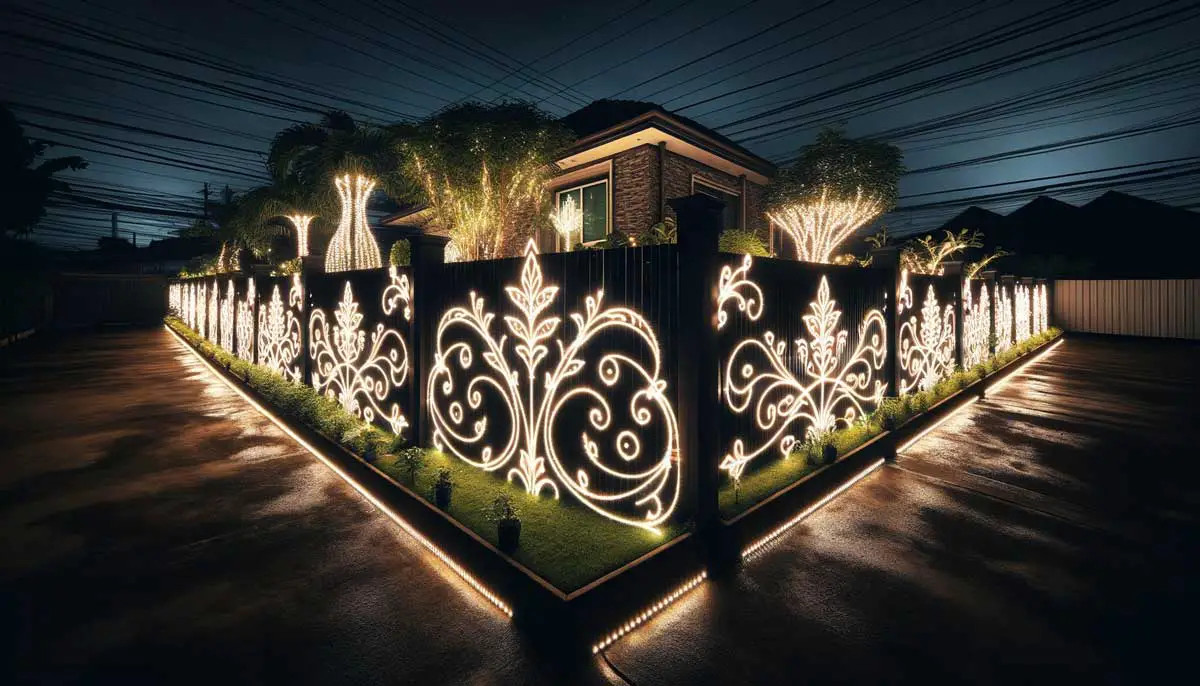
Fences often get treated as nothing more than property boundaries, but they can do a lot more for your yard at night. When you add lighting along these vertical surfaces, a plain fence can become one of the most noticeable features in your outdoor space after sunset.
By installing wall lights along your fences, the edge of your yard stays well-lit, helping the whole space feel more defined. It also improves safety by lighting up hidden corners where small animals or unwanted activity might go unnoticed.
To make this work, the fixtures need to be compact, durable, and suited for outdoor conditions. The light should also point downward so it lights the ground without spilling too much brightness beyond your property line.
Here are some more tips to keep in mind:
- Choose dark-sky approved fixtures with shields or covered tops so the light stays directed downward and doesn’t shine into neighboring spaces or the night sky.
- Install lights on every second or third fence post to create a balanced pattern of light and shadow instead of a continuous bright line.
- Use a low-voltage 12V system for safer, easier wiring across long fence runs, especially in outdoor spaces with plants, pets, or foot traffic.
- Pick fixtures made from cast brass or strong polymer materials so they can handle sun exposure, moisture, and outdoor wear over time.
6. Retaining Walls

Retaining walls often get overlooked because their main job is structural support, holding soil in place and shaping the layout of your yard. But when you add lighting to these surfaces, they shift from purely functional elements into standout features that shape how your outdoor space looks and feels especially in the evening hours.
Adding lights to retaining walls helps clearly mark level changes, steps, and drop-offs, which makes moving around the yard safer and easier. At the same time, the soft glow helps ground the space and gives lower patios or garden areas a calmer, more settled feel.
Incorporating wall lights in these structures can also accentuate details that are often lost when evening comes. When light from the wall fixtures washes over stone or concrete, it highlights every texture and edge, giving the walls more depth and making them stand out in a natural, subtle way.
If you’d like to give this idea a try, here are some tips to guide you:
- Choose corrosion-resistant materials like marine-grade stainless steel or solid cast brass so the fixtures can handle moisture, soil contact, and outdoor wear.
- Use low-output bulbs around 100 to 200 lumens so the path is clearly visible without overwhelming the natural texture of the stone or concrete.
- Space fixtures about 4 to 5 feet apart to create steady, continuous lighting along steps and walkways, reducing dark gaps that can affect safety.
Illuminate Your Outdoors with Wall Lights
Outdoor wall lights do more than help you see at night. When you start using these fixtures on the vertical surfaces around your home, your entire outdoor space can positively change once the sun goes down.
That effect becomes clearer when you start lighting key areas like entryways or garden walls. Incorporating wall lights into such spots can instantly add a layer of light that improves safety, guides movement, and makes the space easier to use after dark.
So now that you know the ideal places to use outdoor wall lights, go and get your fixtures and start illuminating these spots today. You’ll be surprised at how these little changes can create a huge and long-lasting impact on your outdoor space.