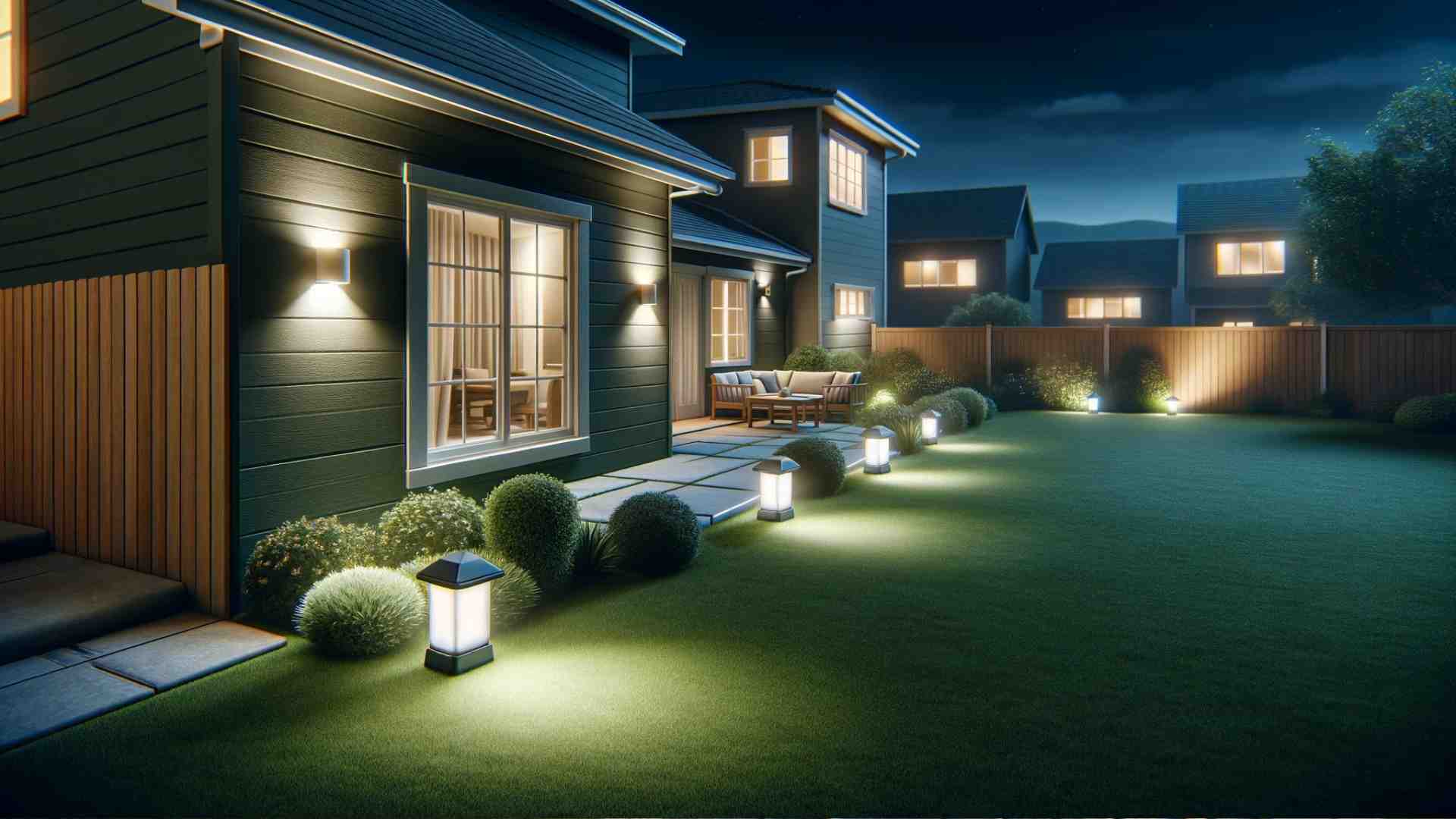
Generally speaking, the ideal height for mounting outdoor wall lights is a little higher than eye level, which typically ranges between 5.5 to 6 feet from the ground. This height ensures the light is neither too high to create a blinding glare nor too low to diminish its effectiveness in illuminating pathways or entryways.
But why is this height considered optimal? Placing lights a little higher than eye level creates a welcoming and evenly distributed illumination, avoiding the creation of harsh shadows or overly bright spots that can occur with improperly placed lighting. It enhances the visibility of steps, doors, and pathways, ensuring safety and convenience for residents and visitors alike.
Moreover, at this height, outdoor wall lights can seamlessly integrate with the architectural elements of a home, complementing its design and adding to the overall aesthetic appeal.
In the next sections, we’ll delve deeper into the nuances of outdoor lighting placement, exploring factors that influence this decision and offering insights for those seeking to create the perfect outdoor ambiance.

How High Should Outdoor Wall Lights Be from the Floor?
Delving deeper into the specifics of outdoor wall lighting placement, it’s clear that the standard eye-level height isn’t just a random choice, but a carefully considered guideline rooted in both functionality and design principles.
The typical eye level, as mentioned earlier, ranges between 5.5 and 6 feet from the ground. This range provides an optimal balance, ensuring that the light is distributed evenly without causing discomfort to the eyes.
It’s essential to consider the specific context of the installation, such as the height of the ceiling, the size of the light fixture, and the primary function of the light. For instance, a light placed too high might lose its effectiveness in illuminating a doorway, while one placed too low could become an obstruction or fail to adequately light a larger area.
Another crucial factor to consider is the design and scale of your outdoor space. The height of outdoor wall lights should be in proportion to the size and style of your home or building. A larger façade might require slightly higher placement to maintain visual harmony, while smaller, more intimate spaces could benefit from lower-placed lighting.
It’s also important to think about the beam spread of the light fixture. A fixture with a wider beam spread might need to be placed slightly higher to prevent the light from shining directly into someone’s eyes, whereas a narrow beam could be positioned lower to highlight architectural or landscape features.
To encapsulate these insights, here are some practical tips and ideas for perfecting your outdoor wall light placement:
- Consistency is Key: Maintain a uniform height for all outdoor wall lights to create a harmonious look.
- Consider Functionality: Position lights to adequately illuminate entryways, paths, and architectural features without causing glare or shadows.
- Match the Scale: Align the light fixture’s size and style with the architectural proportions of your space.
- Adjust for Beam Spread: Opt for a higher placement for lights with a wider beam to avoid direct glare.
- Experiment with Layering: Combine wall lights with other outdoor lighting like ground or landscape lights for a layered effect.
- Factor in Obstructions:Be mindful of doors, windows, and other architectural elements that might impact light placement.
- Embrace Flexibility: While the 5.5 to 6 feet guideline is a great starting point, feel free to adjust based on your specific needs and preferences.

How Big Should An Outdoor Wall Light Be?
Selecting the appropriate size for outdoor wall lights is a critical aspect of exterior design and functionality. The size of the light should not only complement the dimensions of the area it’s illuminating but also harmonize with the architectural features of the building.
A common rule of thumb is that the height of an outdoor wall light should be approximately one-quarter the height of the door it’s near. This ratio ensures that the light is proportionate and visually appealing to the door.
For larger areas or walls without doors, the size of the light should correspond to the scale of the space. Larger, wider spaces can accommodate bigger fixtures, while smaller or narrower areas are best suited to more compact designs.
Beyond just proportions, the size of the light should also be determined based on its intended function.
For ambient lighting, larger fixtures with broader illumination are preferable. In contrast, smaller lights are often adequate for accent lighting or highlighting specific architectural or landscape features.
When choosing the size, it’s also essential to consider the light’s intensity and range. A larger light doesn’t necessarily mean brighter illumination; instead, focus on the lumens (the measure of light output) to ensure your space is lit adequately.
Here are some helpful tips and ideas to guide you in selecting the right size for your outdoor wall lights:
- Proportionate to the Door: Aim for a light that is about one-third the height of the nearest door.
- Scale with the Space: Choose a size that fits well with the overall dimensions and style of your outdoor area.
- Functionality Matters: Consider what you need the light for – ambient, task, or accent lighting – and choose a size that fulfills that purpose.
- Lumens Over Size: Focus on the light output rather than just the physical dimensions of the fixture.
- Balance with Architecture: Ensure the light complements the architectural style and features of your building.
- Avoid Overpowering: Too large a light can overwhelm the space, while too small can underwhelm.
- Consider Multiple Fixtures: For larger areas, using several smaller lights can be more effective than one large fixture.

How Far Should/Can Lights Be Off the Wall?
Determining the optimal distance between outdoor wall lights and the wall they’re mounted on is a key element in achieving the desired lighting effect.
This distance, known as the projection or extension from the wall, impacts both the light distribution and the aesthetic appeal of the space.
A general guideline is to select fixtures that extend far enough to cast light broadly across the area, yet not so far as to become obtrusive or pose a hazard. The ideal projection often depends on the type of fixture and its intended purpose.
For example, decorative sconces may sit closer to the wall, creating a subtle ambiance, while functional lights for security or task lighting may extend further out to illuminate a larger area.
The architecture of the space also plays a crucial role in determining the appropriate projection. In areas with limited space or narrow walkways, it’s advisable to choose fixtures with a shorter extension to avoid obstruction.
Conversely, in open spaces or for lighting larger areas like patios or driveways, fixtures with a greater extension can be more effective.
Another aspect to consider is the angle of light: fixtures that angle downward or have adjustable features can be positioned closer to the wall, as they direct light precisely where it’s needed, reducing glare and light pollution.
Here are some practical tips to guide you in setting the right distance for your outdoor wall lights:
- Function First: Choose a projection that suits the light’s purpose – ambient, task, or security lighting.
- Space Constraints: In narrow areas, opt for fixtures with a smaller projection to avoid obstruction.
- Angle Matters: Consider fixtures with adjustable angles for precise lighting and reduced glare.
- Aesthetic Balance: Ensure the fixture’s projection complements the architectural style and doesn’t protrude awkwardly.
- Safety Considerations: Avoid extending lights too far out where they might pose a hazard or obstruction.
- Layer Your Lighting: Combine different types of fixtures with varying projections for a dynamic and functional lighting scheme.
- Trial and Error: Experiment with different projections to find the best balance between utility and design for your specific space.

Check out our outdoor wall light product:

Illuminating Conclusions: Wrapping Up Our Outdoor Wall Light Insights
In conclusion, the journey to selecting the ideal placement for outdoor wall lights is an intricate balance of design, functionality, and safety.
By adhering to the guidelines and tips discussed, such as maintaining a standard height of 5.5 to 6 feet from the ground, considering the size and projection of the fixtures, and aligning with the architectural style of your space, you can transform your outdoor areas into well-lit, welcoming, and safe environments.
Remember, while guidelines provide a great starting point, the unique characteristics of your space and personal preferences play a significant role.
Ultimately, the right outdoor lighting setup can enhance the beauty and functionality of your home, creating an inviting atmosphere that extends well beyond its walls.