Courtyards are meant to be inviting, whether you’re sipping coffee in the morning or unwinding under the stars. But without the right outdoor lighting, they can feel more like forgotten corners of the yard than cozy extensions of your home. The trick isn’t just adding lights—it’s knowing how to strike the perfect balance between too little and too much.
Get it right, and your courtyard becomes a warm, welcoming space that’s both beautiful and practical. Get it wrong, and you’re either squinting in the dark or dealing with a glow so intense it feels like an interrogation room. Finding that sweet spot doesn’t have to be complicated, but it does take a little know-how.
Today, in this article, we’ll break it all down so you can confidently light up your courtyard without overdoing it. With the right approach, you’ll create a space that feels just as good at night as it does during the day.
Assessing the Size and Layout of Your Courtyard

Not all courtyards are the same. Some are small and intimate, perfect for a quiet coffee spot, while others stretch wide enough to host weekend gatherings. The size and shape of your space directly impact how much outdoor lighting you need and where it should go.
You can’t just scatter a few lights and call it a day. A well-lit courtyard needs a plan—one that takes into account its layout, standout features, and how you actually use the space. The goal is to create the right balance between function and ambiance.
Here’s what to keep in mind when mapping out your lighting:
- Measure the space – A compact courtyard might need just a few well-placed fixtures, while a larger one calls for a more layered lighting approach. Take note of the length and width to get a better sense of coverage.
- Spot the key features – Pathways, seating areas, garden beds, walls, and decorative elements all play a role in lighting placement. The right setup highlights these focal points without creating harsh shadows or uneven brightness.
- Consider the layout – A square or rectangular courtyard allows for a more structured lighting arrangement, while irregularly shaped spaces need a mix of fixtures to distribute light evenly. If your courtyard has curves or sharp angles, you may need extra lighting in certain spots to avoid dark corners.
Understanding Different Types of Outdoor Lights Your Courtyard Needs

Outdoor lighting isn’t just about making your courtyard bright—it’s about setting the right mood, improving safety, and highlighting the best features of your space. The right combination of lights can transform an ordinary area into an inviting retreat while ensuring you can move around comfortably after dark.
To get the best results, it helps to understand the different types of lighting and what each one brings to the table.
Here’s a closer look at the most common types of outdoor lighting and how they can enhance your courtyard:
- Path Lights – These low-level fixtures illuminate walkways, making navigation easier while adding a subtle glow to your landscape. They also help define the layout of your space and reduce the risk of tripping in dimly lit areas.
- Wall Lights & Sconces – Mounted on walls, these lights provide both practical and decorative illumination. They enhance the perimeter of your courtyard, highlight architectural elements, and create a layered lighting effect without overwhelming the space.
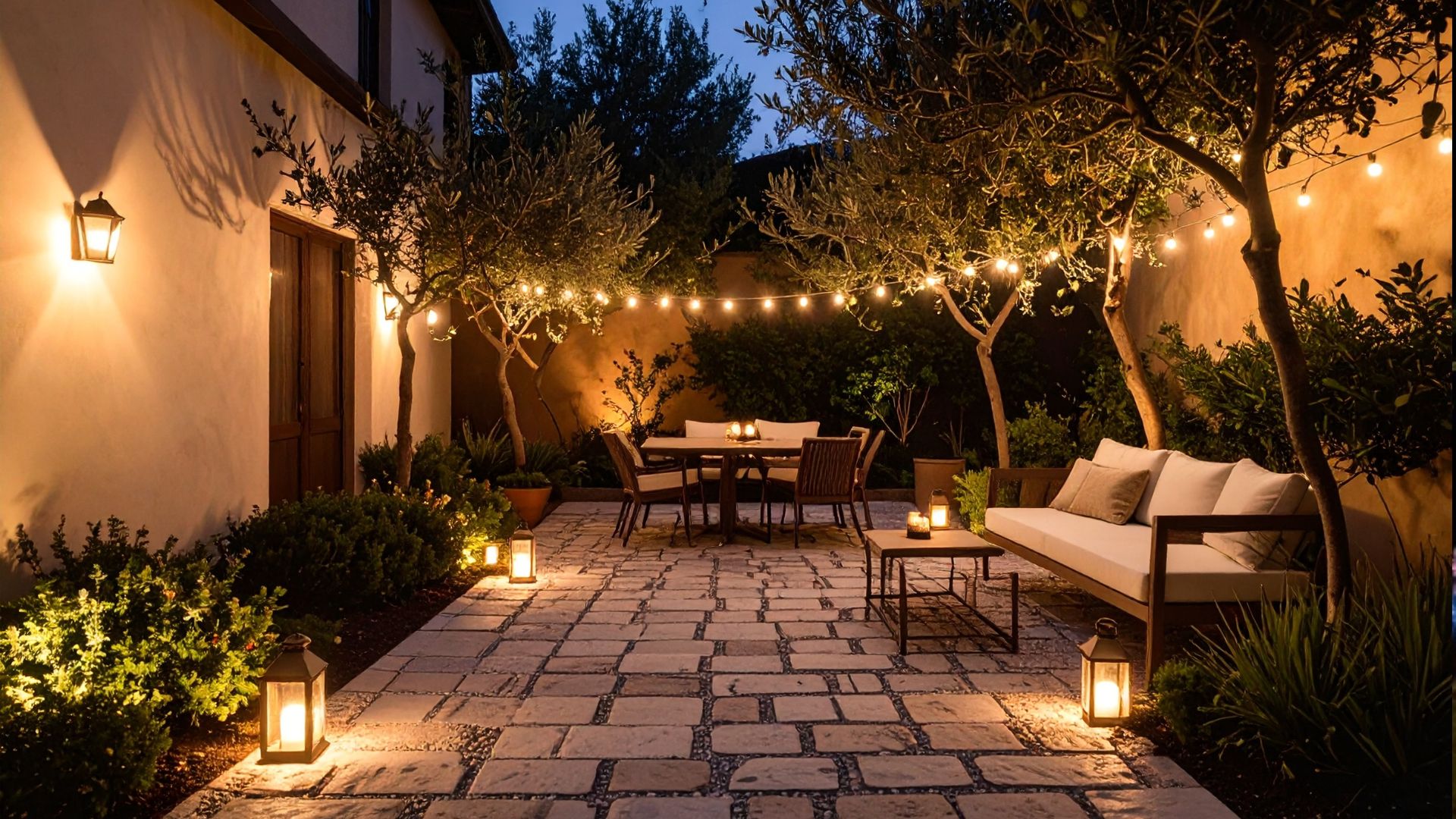
- String Lights & Lanterns – If you want to create a relaxed and inviting atmosphere, these are the way to go. String lights add a soft, enchanting glow overhead, while lanterns placed around seating areas bring warmth and charm to the space.
- Floodlights & Spotlights – Ideal for highlighting key features or brightening up large areas, these lights offer more focused illumination. Spotlights can draw attention to garden sculptures or trees, while floodlights provide wider coverage for extra security and visibility.
- Post Lights & Bollards – These taller fixtures help define the edges of your courtyard while adding a stylish touch. They’re especially useful for larger spaces that need extra lighting without cluttering the overall design.
- Recessed & In-Ground Lights – For a modern and seamless look, these fixtures are installed directly into the ground, walls, or steps. They provide a subtle yet effective glow that enhances pathways, seating areas, and architectural details without drawing too much attention to the light source itself.
Determining the Right Brightness and Light Spacing

When planning outdoor lighting for your courtyard, brightness and spacing are just as important as choosing the right fixtures. Too much light can make the space feel harsh and overwhelming, while too little can leave it dim and unwelcoming. The key is to strike a balance that enhances both functionality and ambiance.
Lumens, which measure brightness, help determine how much light each area of your courtyard actually needs. Different spaces require different illumination levels, and proper spacing prevents overly bright spots or unwanted dark patches.
Let’s break down how to achieve a well-lit, visually appealing courtyard:
- Understanding Lumens – Unlike watts, which measure energy consumption, lumens indicate brightness. A warm, inviting glow typically falls in the 100–200 lumen range, while security or task lighting may require anywhere from 700 to 1300 lumens.
- Recommended Lumens for Different Areas – Walkways and garden beds look best with 100–200 lumens per fixture, seating areas benefit from 300–600 lumens, and focal points such as statues or trees may need spotlights ranging from 400 to 700 lumens.
- Ideal Spacing for Various Light Types – To ensure even illumination, path lights should be placed 5–8 feet apart, wall sconces work best at about 6–8 feet apart, and floodlights should be positioned strategically to provide overlapping coverage without creating harsh shadows.
- Layered Lighting for a Balanced Look – Combining ambient, task, and accent lighting keeps the space well-lit without being overpowering. A mix of brightness levels creates depth and warmth, ensuring your courtyard feels both comfortable and visually dynamic.
How Many Outdoor Lights Does Your Courtyard Need?

The size of your courtyard plays a huge role in determining how much lighting is necessary. Too little, and you’ll be stumbling around in the dark. Too much, and you might feel like you’ve accidentally recreated a football stadium. The key is striking the right balance, ensuring your space is both functional and inviting.
- Small Courtyards (Under 150 sq. ft.) – With limited space, a few well-placed lights go a long way. Around three to five fixtures should be enough to create a warm, welcoming glow without overpowering the area. Wall sconces provide soft ambient lighting, while path lights ensure safe footing. For added charm, consider a small lantern or a string of café lights to enhance the atmosphere.
- Medium Courtyards (150–400 sq. ft.) – A mix of lighting styles helps define different sections while maintaining a cohesive look. Six to ten fixtures are ideal, blending wall-mounted lights for general illumination, path lights for walkways, and accent lighting to highlight key features. Spotlights or in-ground lights can draw attention to plants, water elements, or textured walls, creating depth and visual interest.
- Large Courtyards (400+ sq. ft.) – Expansive spaces need a well-thought-out lighting plan to avoid uneven brightness. At least ten fixtures work best, combining ambient, task, and decorative lighting. Post lights or floodlights brighten larger areas, while bollard lights guide pathways. Spotlights and recessed lights can emphasize focal points like sculptures, trees, or seating areas, giving the space a polished and inviting look.
Additional Factors That Affect the Number of Lights

Courtyard size sets the foundation for your lighting plan, but it’s not the only thing that matters. Existing light sources, reflective surfaces, and the atmosphere you want to create all influence how many fixtures you actually need. Paying attention to these details helps you get the right balance of brightness, efficiency, and style.
- Existing Ambient Light – Nearby porch lights, street lamps, or interior lighting from large windows can already provide some illumination. Instead of overpowering these sources, use additional lighting to enhance shadows, add depth, or highlight key features. Softer accent lighting may be all you need if ambient light is strong.
- Reflective Surfaces – Walls, pools, and glass panels naturally bounce light around, making your space appear brighter. If your courtyard has these elements, you can space out fixtures more widely or use dimmer lights to prevent glare. A well-placed spotlight can take advantage of reflective surfaces, subtly boosting the overall glow.
- Desired Mood – The purpose of your courtyard lighting affects how many fixtures you need. A bright and lively setup for entertaining calls for more lights with a mix of overhead and accent fixtures, while a cozy, relaxed atmosphere benefits from fewer, warmer-toned lights placed strategically.
- Energy Efficiency and Budget – More lights mean higher energy consumption, so choosing efficient options is key. LED bulbs, solar-powered fixtures, and motion sensors help you achieve the right amount of brightness while keeping costs and energy use in check. Planning smartly ensures you get both aesthetics and practicality without overspending.

Bring Your Courtyard to Life with the Right Number of Outdoor Lights
Your courtyard should be more than just a patch of outdoor space—it should feel like an extension of your home, welcoming and well-lit for any occasion. The right outdoor lighting doesn’t just improve visibility; it shapes the ambiance, highlights key features, and makes the space more functional. With a little planning, you can strike the perfect balance, ensuring your courtyard feels cozy and inviting without being overly bright or cluttered.
Lighting isn’t just about numbers—it’s about creating an atmosphere that matches your lifestyle. A thoughtfully lit courtyard enhances both aesthetics and practicality, giving you a space that’s as enjoyable as it is functional. With the right approach, your outdoor lighting won’t just brighten your courtyard—it will bring it to life.