Most homeowners don’t realize it, but outdoor lighting can be a little sneaky. What starts as a simple plan to light up the walkway or highlight the garden often turns into a yard that could double as a landing strip. The trouble usually isn’t the lack of effort — it’s figuring out how much light is actually enough.
Once you dive into it, you’ll see that outdoor lighting isn’t about cramming every dark corner with bulbs. It’s about using just the right amount of brightness to make your space feel safe, comfortable, and easy on the eyes. A little planning goes a long way, and often, less light does a better job than more.
Today, in this article, we’re going to break down exactly how to hit that perfect balance. Your outdoor spaces will thank you — and so will your neighbors.
Understanding Outdoor Lighting Brightness Basics

Before you start planting light fixtures like lawn ornaments, it’s worth slowing down and brushing up on the basics. Outdoor lighting isn’t just about flipping the switch and hoping your yard magically looks perfect — brightness plays a huge role in getting the mood (and the function) just right.
What is Brightness? (Lumens vs. Watts)
A lot of us grew up thinking watts were the boss when it came to how bright a light would be. But when it comes to outdoor lighting — especially with modern LEDs — lumens are the real star of the show. Understanding the difference can save you from lighting your patio like a convenience store parking lot.
- Lumens tell you how much light a bulb actually gives off, no matter how much energy it slurps up.
- Watts only measure how much power the bulb uses, not how bright the light will be.
- Why this matters: With LEDs and other energy-smart bulbs, you can get plenty of light using fewer watts — so focusing on lumens helps you avoid accidental light overload.
- Quick tip: Always check the lumens on the label, especially when swapping old-school incandescent bulbs for sleek new LEDs.
- In plain terms: Lumens guide your lighting choices; watts just tell you how much juice your electric bill’s going to swallow.
The Goldilocks Principle: Not Too Dim, Not Too Bright
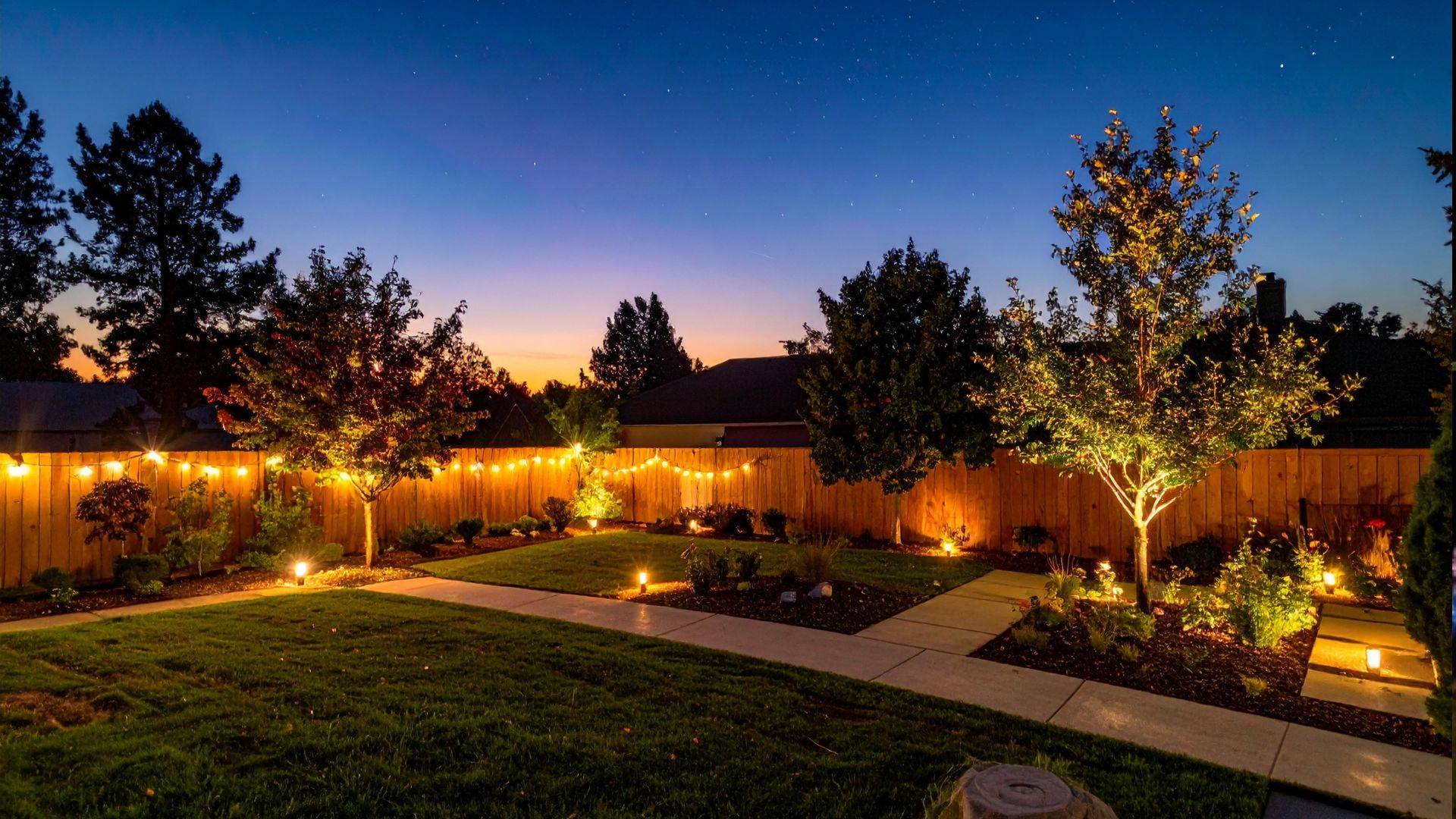
Outdoor lighting works best when you hit that sweet spot — not so dim you’re tripping over your garden hose, but not so bright your yard looks like a department store display. The human eye is surprisingly sensitive in the dark, which means even a small amount of light can go a long way.
- Your eyes adjust to the dark quicker than you’d expect, so even soft lighting can feel brighter than you think once night falls.
- Too much brightness can flatten your landscaping, washing out textures and stealing all the charm from your outdoor setup.
- Balanced lighting makes your space feel both inviting and easy to navigate, without turning it into a beacon for the entire neighborhood.
- A softer glow can actually highlight your space better, guiding people’s attention rather than overpowering it.
- When in doubt, go for subtle. The right light doesn’t scream for attention — it just quietly makes everything look better.
The Consequences of Overlighting

It’s easy to fall into the trap of thinking that brighter always means better when it comes to outdoor lighting, but the truth isn’t that simple. Piling on too much light can cause more problems than it solves, and most of the time, the downsides show up before you even realize what went wrong:
- Glare makes it harder — not easier — to see. When lights are too bright, your eyes end up squinting against the harsh glow rather than relaxing into the space. It creates sharp, blinding contrasts that can hide trip hazards and throw shadows where you least expect them. What you hoped would make your outdoor space safer can actually make it trickier to navigate.
- Your electric bill climbs while your lighting stays wasteful. Overdoing the brightness doesn’t just flood your yard with light, it also drains your wallet one kilowatt at a time. The worst part is, the extra light usually isn’t making the space look any better — just more washed out and overexposed. Smart outdoor lighting focuses on efficiency, not excess.
- Too much light strips away your yard’s charm. Bright, flat lighting can erase all the interesting textures and details that make a space feel alive and inviting. Instead of cozy garden paths and sculpted hedges, you get something that looks like it belongs in a showroom — lifeless and plain. A balanced glow gives your yard depth, while too much light flattens everything like a bad photo.
- Excess light leaks beyond your space and into the sky. When outdoor lighting is more than your space needs, it doesn’t just stay neatly on your lawn — it drifts into your neighbor’s windows and clouds the night sky. Light pollution from just one yard can dim the stars for the whole street and unsettle local wildlife too. A little less brightness keeps the peace for both your block and the birds.
- Overlit spaces lose their cozy, welcoming vibe. Instead of creating a soft and inviting atmosphere, too much light makes outdoor areas feel stark, sterile, and a little uncomfortable. People are drawn to warm, gentle lighting — not floodlit patios that feel more like parking lots. The right brightness level turns your space into one where people actually want to linger.
Factors to Consider Before Choosing Brightness Levels

When it comes to outdoor lighting, the right brightness isn’t about going for the most powerful bulb — it’s about choosing the perfect level for your specific needs. A little thought and strategy can ensure your lights look great and function properly without overwhelming your space:
- Match the brightness to the space’s purpose. Different areas of your yard have different needs when it comes to lighting, so the level of brightness should reflect that. A pathway requires just enough light to guide the way, while a deck or patio might need something warmer and softer to create ambiance. Knowing how each area will be used helps you avoid a generic lighting setup that doesn’t cater to the space’s function.
- Consider the size of the area you’re lighting. Larger spaces naturally require more lighting power, but that doesn’t mean you need to turn everything up to full blast. A tiny garden, for example, will look more inviting with subtle lighting, while a sprawling backyard might need a few strategically placed fixtures to balance out the overall brightness. The key is ensuring the size of the space dictates how much light is used, not the other way around.
- Take into account the natural light already in your environment. If your yard gets a fair amount of moonlight or ambient glow from street lamps, you may not need as much artificial light to brighten things up. Ignoring this natural light often results in overlighting and a competing effect that doesn’t do the space any favors. The goal is to complement the existing light and use your outdoor lighting to enhance, not overpower, what’s already there.
- Think about the level of human activity in the space. A bustling front yard will require brighter, more functional lighting compared to a secluded corner of your garden. High-traffic areas, like the front steps or a seating area, benefit from lighting that’s practical but still warm and inviting, while a quiet garden might only need minimal light to highlight its beauty. The activity the space sees should dictate how much brightness is necessary for comfort and atmosphere.
- Consider the types of fixtures you’re using. Not all outdoor lights are created equal, and different fixtures distribute light in different ways. A wall sconce, for example, casts a soft, diffused light, while a floodlight can create harsh, directional brightness. When choosing fixtures, make sure they complement the space and purpose, as the right fixture can help you achieve the perfect level of brightness without the need to crank up the lumens.
- Reflect your home’s style in your lighting choices. Your home’s aesthetic plays a big role in how bright your outdoor lighting should be. A modern, minimalist home might look great with bright, cool-toned lighting, while a cozy cottage could benefit from a more subdued, warm glow. Tailoring the lighting to match your home’s style ensures a cohesive look that feels intentional rather than forced.
Smart Lighting Tools to Prevent Overlighting

A few smart tools can help you strike that sweet spot between too dim and way too bright — and they make the job surprisingly easy:
- Dimmers and adjustable brightness settings. Dimmers give you the flexibility to shape the atmosphere around your home, whether you want a soft, welcoming glow for quiet nights or a brighter setup for backyard get-togethers. Instead of settling for one fixed light level, you can dial the brightness up or down depending on the occasion, the mood, or even the weather. It’s one of the simplest ways to avoid overlighting while making your outdoor space feel both comfortable and intentional.
- Motion sensors. Motion sensors take the “always-on” problem out of the equation by lighting up your outdoor areas only when they’re actually in use. The moment someone walks by — whether it’s you coming home late or the mail carrier making a surprise stop — the light responds automatically, giving you the right amount of brightness exactly when you need it. This keeps your outdoor lighting practical and energy-friendly, not to mention it adds a little boost of security without overdoing the glow.
- Smart LED bulbs. Smart LED bulbs take the guesswork out of brightness control by letting you adjust them straight from your phone or voice assistant. You can set them to be soft and subtle for winding down or bright and bold for outdoor chores, all without touching a single switch. The best part? These bulbs are designed to be energy-efficient, which means your outdoor lighting will feel just right — for both your eyes and your electric bill.
Outdoor Lighting That Fits — Not Fights — Your Space
At the end of the day, outdoor lighting isn’t about flooding every inch of your yard — it’s about giving your space the kind of glow that feels natural and inviting. Light should feel like part of the landscape, not an awkward guest trying too hard to stand out. Once you land on the right balance, your outdoor space quietly transforms without stealing the spotlight.
Finding that sweet spot isn’t about chasing perfection, it’s about knowing when enough is enough. Thoughtful choices will always create a more welcoming vibe than over-the-top brightness ever could. In the end, light should frame the beauty of your home, not fight against it.