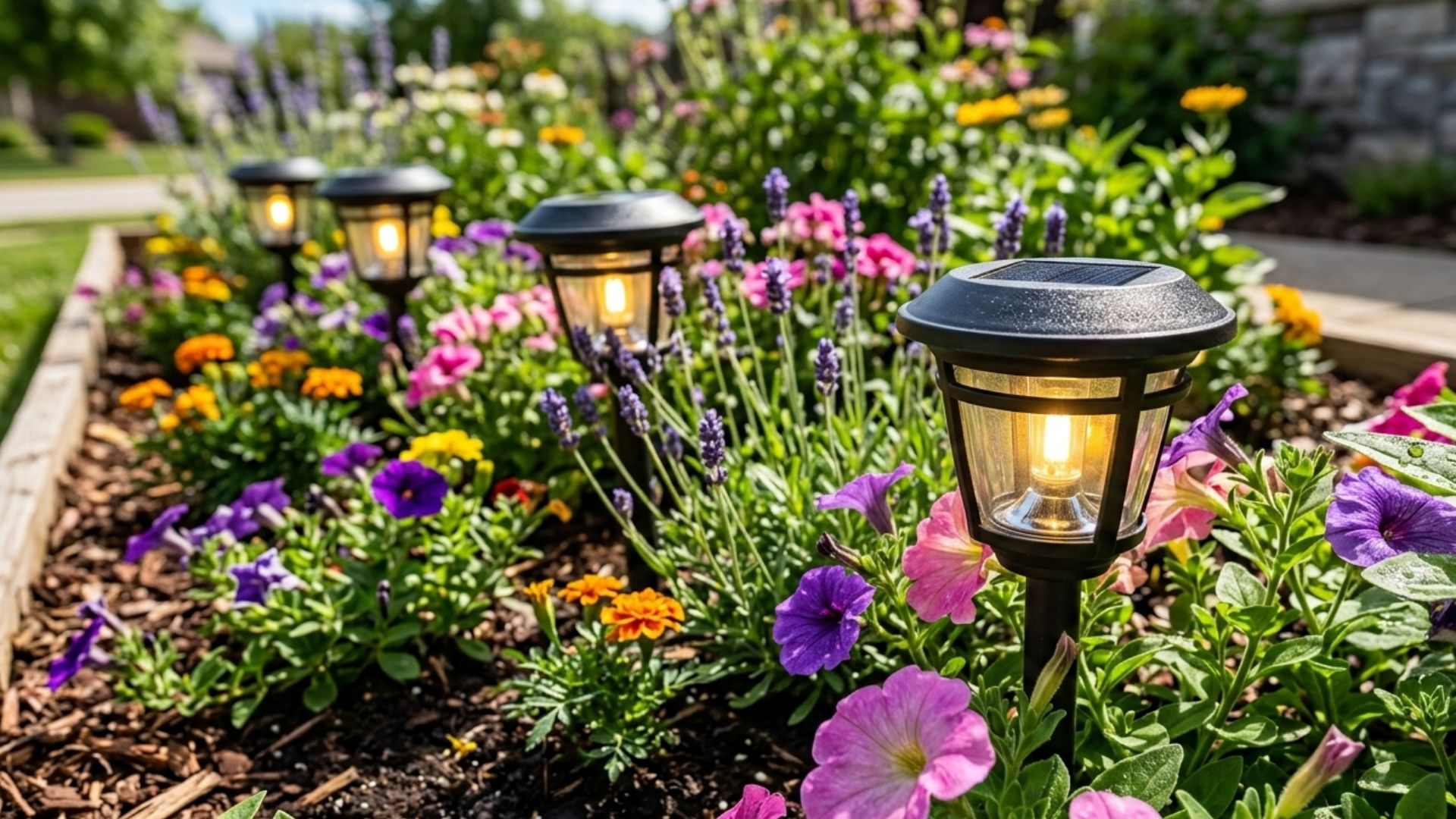
Finding your solar lights shining at noon is like seeing a flashlight on at the beach on a bright sunny day. Most people expect their solar outdoor lighting to wait for the moon before making an appearance. You probably didn’t buy these fixtures to compete with the actual daylight.
A solar light that refuses to sleep is essentially a confused little robot. It is burning through precious battery life for no reason at all.
Today, we are going to figure out exactly why your precious solar lights are acting so rebellious, and what to do to stop them from shining in broad daylight.
How Solar Lights Work and Why They Usually Light Up Only In Darkness

Solar lights are practical little machines that spend their day collecting energy to power your evening. The solar panel on top of these fixtures catches the sun’s rays and converts them into electricity. This energy is then tucked away in a rechargeable battery for later use.
The secret to these lights’ timing lies in a tiny light sensor that acts like the brain of the fixture. While it detects bright light, it keeps the LED turned off so the battery can focus on charging. It’s a simple system designed to save all that power for when you actually need it.
Once the sun sets, the sensor detects the darkness and finally allows the battery to kick in. This shift triggers the LED to glow, transforming your dark garden into an illuminated retreat. When dawn returns, the sensor flips the “off” switch to start the whole cycle again.
Common Reasons Why Solar Lights Turn On During the Day

Your solar lights are usually pretty smart, but they can be easily fooled by their surroundings. When the internal sensor gets the wrong signal, it triggers the battery to kick in way too early.
Here are some of the common reasons why your backyard might be glowing before the sun actually goes down:
- Dirty Solar Panels— A thick layer of dust or pollen acts like a blindfold that keeps the sensor in the dark. If the light’s “eyes” are covered in grime, they simply can’t tell that it is actually daytime. This creates a false night that keeps the bulb burning all afternoon.
- Deep Shading— Placing a fixture under a thick tree canopy or a porch roof can create a localized pocket of darkness. The sensor might be sitting in a shadow that is just deep enough to mimic twilight. Even on a bright day, that little bit of shade is enough to trick the system.
- Water Infiltration— Moisture sometimes finds its way inside the casing after a heavy storm or a humid week. This water can mess with the internal wiring and cause a temporary short circuit. When the electronics get wet, the light often stays on because the sensor is essentially glitching out.
- Faulty Sensors— Sometimes the hardware itself just starts to wear down after years of sitting out in the elements. A sensor that has been baked by the sun or frozen in the winter might lose its ability to measure light accurately. At that point, the fixture loses its sense of timing entirely.
- Internal Mode Settings— Many lights have small manual switches that can be bumped or set incorrectly during assembly. If the light is accidentally toggled to a “test” or “manual” mode, it will ignore the sun and stay on constantly. It’s a simple mechanical mix-up that leads to a lot of wasted battery power.
Environmental & Seasonal Factors That Turn Solar Lights On During the Day

Sometimes the weather and the season team up to confuse your lighting more than a faulty sensor ever could.
Mother Nature doesn’t always follow the rules of a clear blue sky, and your fixtures can easily get caught off guard by natural shifts in the atmosphere.
These are the external factors that tend to mess with your solar light’s internal clock:
- Overcast and Stormclouds – A sudden, heavy thunderstorm can turn a bright afternoon into a deep, moody gray in a matter of minutes. When the clouds are thick enough to block out the majority of the sun’s rays, the sensor assumes the day is over and kicks the LED into gear. This is usually just a temporary glitch that fixes itself once the clouds finally break.
- Low Winter Sun Angle – During the colder months, the sun sits much lower on the horizon and casts shadows that stretch much further than they do in the summer. A spot that was drenched in sunlight in June might be completely shaded by a neighbor’s roof or a hedge during the winter. This lack of direct intensity tells the sensor to stop charging and start glowing much sooner than expected.
- Extreme Temperature Spikes – High heat can be surprisingly hard on the delicate electronics hidden inside the plastic casing of your solar lights. When the thermometer climbs too high, the electrical components can become sensitive and start sending erratic signals to the battery. This heat-induced “brain fog” often results in a light that turns on during the hottest part of the day.
- Ice and Frost Layers – A thin coating of morning frost or a layer of ice can act like a frosted windowpane over the light’s sensor. Even if the sun is out, that icy barrier scatters the light and prevents the sensor from detecting the full brightness of the day. Until the ice melts away, your light might stay convinced that it is still living in the early morning hours.
How to Fix Solar Lights That Turn On During the Day

You don’t need a degree in electrical engineering to get your solar lights back in sync with the sun. Usually, a few minutes of basic maintenance is all it takes to convince a confused fixture that it is still daytime.
Here are some simple, practical ways to stop those bulbs from glowing while the sun is out:
- Clean the Solar Panel— Wiping down the top of your light’s panel with a clean, dry cloth can work wonders for its performance. When a panel is covered in a layer of dust and debris, the sensor underneath stays trapped in a shadow. Once you clear that surface, the sensor will finally recognize the sunlight and shut the light off.
- Relocate the Fixture— Sometimes a light is just in a bad neighborhood for shadows, like right under a thick bush or a low-hanging eave. If your sensor is spending its afternoon in the dark, it is going to act like it is night. Moving the light to a patch of grass that gets direct sky exposure will usually fix its internal clock.
- Check the Internal Switches— It is surprisingly common for a light to be switched to the “Test” or “Manual” mode by mistake during unboxing. These settings tell the light to stay on regardless of how bright it is outside. Double-check that the tiny toggle on the bottom is set to “On” or “Auto” so the sensor can do its job.
- Dry Out the Interior— Pop the cover off and check for any trapped condensation or standing water that might be messing with the wiring. Moisture can cause the electrical “brain” of the light to glitch out and stay active 24/7. Letting the components sit in a dry, sunny window for an afternoon can often reset the system to factory-fresh performance.
- Reset the Battery— If the light is still acting up, try taking the battery out and leaving it on the counter for a few minutes. This acts as a hard reset for the circuit board, clearing out any minor electronic hiccups that are keeping the LED lit. Putting a fresh or fully charged battery back in can give the sensor the boost it needs to behave.
Helpful Tips to Prevent Your Solar Lights From Turning On at Daylight

Keeping your solar lights from acting up is much better than trying to fix them once they are already confused. Here are some easy ways to keep your sensors working exactly like they should:
- Regular Maintenance Schedule— Make it a habit to wipe the top of your lights with a soft cloth every few weeks. This keeps the sensor clear so it can tell the difference between a bright afternoon and a dark night.
- Trim Nearby Foliage— Use your garden shears to cut back any leaves or tall grass that might grow over your fixtures. Even a small bit of shade from a plant can trick the light into thinking that the sun has already gone down.
- Smart Placement Strategy— Look at where the shadows fall in your yard during the morning and the late afternoon. You want to make sure your lights are not sitting in a dark spot caused by a fence or a wall while it is still daytime.
- Apply a Protective Coating— Putting a tiny bit of clear wax on the plastic cover can help rain and dirt slide right off. This keeps the surface from getting cloudy so the sensor can always see the sky clearly.
- Store During Extreme Weather— Put your lights in the garage if you are expecting a very bad storm or a week of freezing snow. Keeping the small parts inside the light away from the cold or heat helps them stay accurate for a much longer time.
Keep Your Solar Lights Working at their Best
Seeing your solar lights glowing in the middle of a sunny afternoon is nothing to lose sleep over. While it looks unusual, these small timing glitches are very common and quite easy to handle.
You can usually get everything back in sync without needing any special skills or expensive replacement parts. Most of the time, your lights just need a little bit of attention to start acting like their usual selves again.
So now that you know how to manage these quick fixes, you can sit back and let your lights do their job.