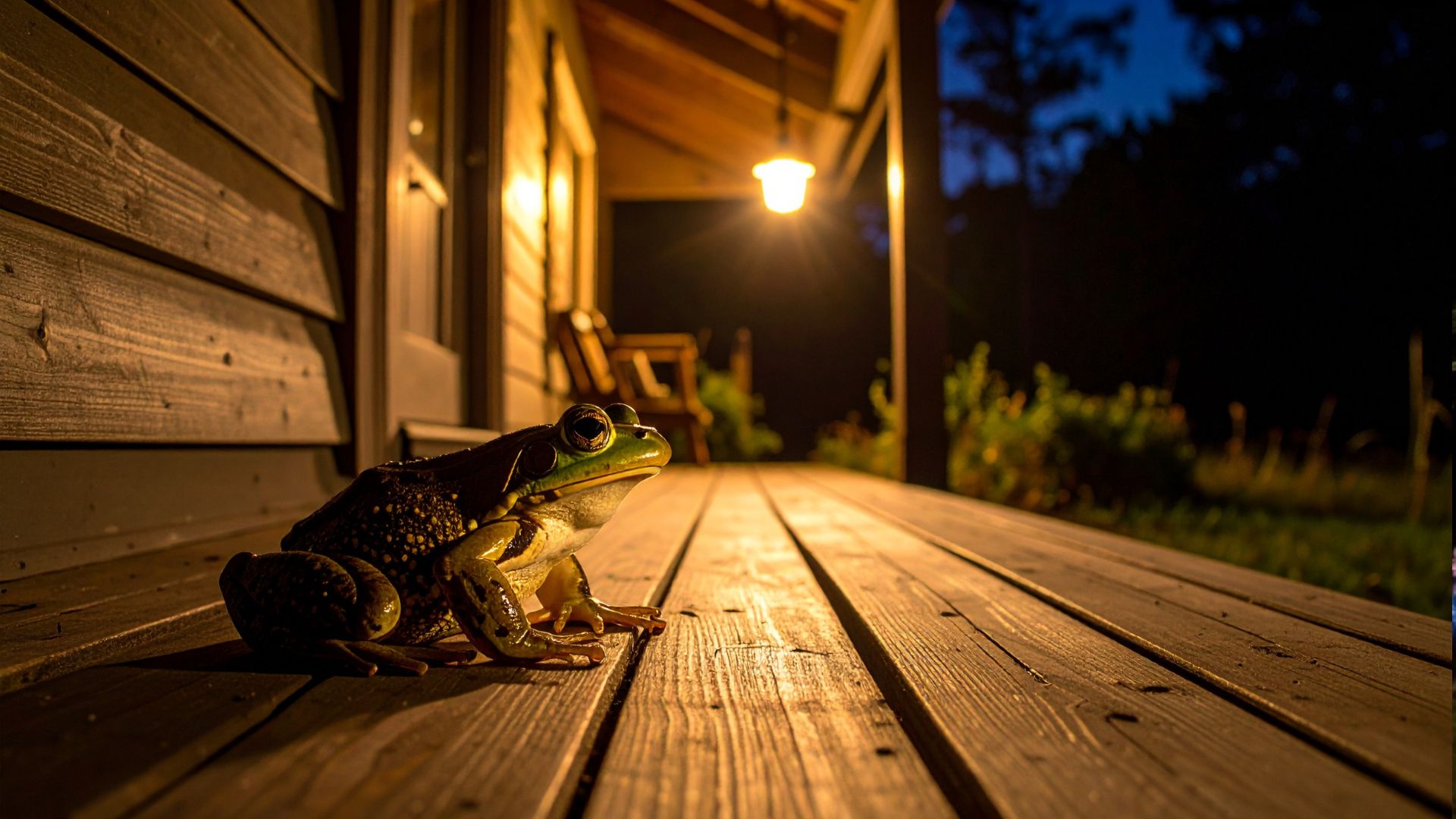
You might step outside one evening, coffee in hand, only to spot a frog or two hanging out under your porch light like they own the place. At first, it’s kind of amusing—they’re just sitting there, not causing trouble, acting like part of the household. But after a few nights of the same scene, you start to wonder if they know something you don’t.
At first, you chalk it up to nature doing its thing. But after the third or fourth frog sighting in the same week, it’s hard not to raise an eyebrow. There’s a pattern here—and it seems to revolve around your lights.
Today, in this article, we’ll break down exactly why your outdoor lights are turning into frog magnets.
Outdoor Lights Aren’t the Problem—It’s What It Attracts

Your outdoor lights aren’t luring frogs because the latter like the ambiance or appreciate your bulb choice.
Frogs don’t care about the glow itself. What they’re after is what that glow attracts: a steady stream of flying insects that treat your lights like a late-night meeting point. And once frogs catch on, they start treating those lit areas like reliable hunting grounds.
Here’s how your outdoor lighting quietly turns into a frog-friendly food court:
- Artificial lights confuse flying insects – Most nighttime bugs use natural light from the moon and stars to navigate, but artificial lights throw them off completely. They end up circling porch lights or hovering near fixtures, caught in a loop they can’t escape—which makes them easy targets.
- Some light types attract more bugs than others – Bulbs that emit ultraviolet light or warm tones—like incandescent, compact fluorescent, or older LEDs—are basically insect magnets. The more bugs your lighting draws in, the more appealing your porch becomes to nearby frogs.
- Frogs are quick to notice where the food is – Instead of chasing insects through grass or plants, they hang out by the light and let the snacks come to them.
- They’re creatures of habit once they find a good spot – If bugs show up consistently, so will the frogs. After a while, your porch light becomes part of their evening routine.
- The longer your lights stay on, the more you’re feeding the cycle – A light that glows all night just keeps the bugs coming—and the frogs know it. Bright, all-night lighting acts like a never-closing diner for your little amphibian guests.
Outdoor Lighting Choices That Attract Frogs

Believe it or not, the kind of lighting you use around your home can make a big difference in how many frogs stop by. Some setups unintentionally create the perfect late-night snack stop—for insects and the frogs that follow them.
Certain lighting choices are more likely to turn your porch or yard into a frog favorite, and here’s what to watch out for:
- Bright, unshielded lights – When light spills in every direction, it’s much more likely to catch the attention of flying insects. More bugs buzzing around means more frogs hopping in to take advantage of the easy meal.
- Incandescent or compact fluorescent bulbs – These older bulbs tend to run warm and emit light in wavelengths that attract bugs like magnets. The result? A small swarm of insects that frogs are more than happy to snack on.
- Cool white or daylight LEDs – LEDs are energy efficient, sure—but ones with high color temperatures (above 3000K) still draw in plenty of flying insects. Their bluish-white tone mimics daylight, which bugs seem to love a little too much.
- Lights placed near gardens, mulch beds, or damp areas – Installing lights close to moist spots or dense plants makes it easier for frogs to feel at home. They like places with cover and water nearby, and if the light also brings food, it’s a win-win.
- Lights that stay on from dusk till dawn – Leaving lights on all night gives insects more time to gather—and frogs more reason to hang around. Switching to motion sensors or timers helps break that cycle without sacrificing visibility when you need it.
When Lighting Isn’t the Only Problem

While your outdoor lights play a big role in attracting frogs, it’s not always working alone. Sometimes, your yard is already a five-star frog resort—and the lights just make it easier to find.
If you’re still seeing frogs even after adjusting your lights, here are a few other things that might be rolling out the welcome mat:
- Standing water or decorative ponds – Frogs need moisture to survive, and any still water around your home is practically an open invitation. Backyard ponds, birdbaths, clogged gutters, or even a forgotten bucket of rainwater can turn into a frog-friendly hangout.
- Overwatered lawns or soggy soil – If your yard stays damp into the evening, it becomes a cool and comfortable spot for frogs to settle. Excess water also keeps insects active, which makes the area even more tempting.
- Thick plants and ground-level hiding spots – Frogs like having places to tuck themselves away during the day. Dense shrubs, ivy, tall grass, or garden beds offer the cover and shade they’re looking for.
- Mulch, wood chips, or leaf piles – These areas hold moisture and attract bugs, which is a winning combo for frogs. Add a little nighttime lighting nearby, and you’ve just created a cozy hunting ground.
How to Manage Outdoor Lighting to Minimize Frog Activity

You don’t need to plunge your backyard into total darkness to keep the frogs away. A few smart lighting tweaks can go a long way in making your space less appealing to them—without compromising visibility or safety.
Here are some easy ways to adjust your outdoor lighting and discourage regular frog visits:
- Choose warm-colored, low-attraction bulbs – Bulbs with a color temperature under 2700K—or those labeled “bug lights”—emit a softer glow that doesn’t lure in as many insects. Fewer bugs mean frogs won’t have much reason to stop by.
- Use motion sensors or timers – Lights that only turn on when needed don’t give bugs (or frogs) time to settle in. It also adds a layer of convenience and saves electricity while you’re at it.
- Install fixtures that point light downward – Shielded, downward-facing lights reduce glare and limit how much light spills into bug-heavy areas. They keep your paths visible without lighting up every corner of the yard like a stage.
- Avoid lighting up damp or garden-heavy zones – If your lights are aimed at mulch beds, ponds, or areas with dense plants, try repositioning them. Lighting drier, more open areas makes your yard less frog-friendly without dimming the whole space.
- Cut back on how long lights stay on at night – Try using timers or setting a habit of turning lights off earlier in the evening. The less time your yard stays lit, the fewer bugs—and frogs—you’re likely to attract.
Tips for a Wildlife-Friendly Outdoor Lighting

You can have a well-lit yard and still be a good neighbor to the frogs, birds, bugs, and everything in between. Outdoor lighting doesn’t have to clash with nature—in fact, with a little thought, it can quietly blend right in.
Here are some thoughtful ways to create outdoor lighting that works with nature, not against it:
- Choose lower light levels where possible – Brighter isn’t always better—especially outdoors. Using just enough light to move safely through a space helps reduce the impact on frogs and other wildlife that rely on natural darkness to feed, move, and rest.
- Use multiple smaller lights instead of one bright one – Spreading light across your space with several well-placed fixtures helps avoid overlighting any single area. It keeps things functional for you and less disruptive for any critters passing through.
- Skip the cool tones in garden and natural spots – Cooler, bluish lights tend to mess with natural rhythms and draw more activity where you don’t want it. Stick with warm tones, especially near plants, trees, or damp corners of the yard.
- Be mindful of when your lights are on – Frogs are most active shortly after dark, so consider dimming or switching off decorative lights during those early evening hours. You’ll still have light when you need it—and they’ll have a quieter night.
- Watch where your light spills – Lighting that reaches beyond your yard—into trees, fences, or neighbor’s space—can impact animals you don’t even see. A little care in fixture placement goes a long way in keeping things calm and naturally balanced.
Keep Frogs At Bay with the Right Outdoor Lights
Frogs don’t randomly wander under your porch light hoping to redecorate your entryway. They show up because the conditions are just right—and your lighting plays a bigger role in that than you might expect. What seemed like a harmless glow turned out to be a signal in the night.
You’ve seen how outdoor lights influence what shows up after dark, often in ways we don’t intend. The good news is, you don’t need to give up your lighting altogether to change that outcome. A few smart adjustments can turn your space from frog favorite to just pleasantly lit.
Your yard is yours to shape—right down to who decides to visit after sundown. Now that you know what your lights might be saying, you’re in charge of changing the message.