Outdoor lighting can really work wonders for any yard, but when it comes to sloped yards, things get a bit more fun. Sure, they bring their own challenges, but with a clever plan, you can turn those slopes into a beautiful feature rather than a frustrating obstacle.
The natural shape of a sloped yard can actually help you decide where to place your lights. It’s all about finding ways to enhance the landscape while keeping things functional and welcoming.
In this article, we’ll dive into some creative lighting ideas that not only tackle the challenges of a sloped yard but also make it shine. With the right approach, those hills and inclines will become the stars of your outdoor space.
Challenges of Lighting a Sloped Yard
Before we dive into the best outdoor lighting for sloped yards, it’s helpful to first get familiar with some of the unique quirks that come with lighting uneven ground. While these slopes add plenty of character to your yard, they do come with a few challenges that we’ll need to work around:
- Uneven Light Spread: Getting even lighting on a sloped yard isn’t always straightforward. The incline can cause certain areas to be too dim or overly bright, making it tough to create a balanced look.
- Water Drainage: Slopes tend to channel rainwater, which can be bad news for your lighting fixtures. You’ll want to ensure you’re using waterproof lights that can handle the runoff without blinking out.
- Tricky Installation: Installing lights on a slope isn’t as simple as just sticking them in the ground. The uneven surface means you might have to think outside the box to get the lights placed securely.
- Shadow Issues: Slopes can throw shadows in unexpected places, which can make your yard look a little eerie at night. Without careful planning, what seems well-lit by day can become a shadowy puzzle by evening.
- Safety Hazards: Navigating a sloped yard is already a bit of a challenge, and poor lighting can make things riskier. Making sure paths and steps are well-lit is crucial for keeping things safe after dark.
Factors to Consider When Lighting a Sloped Yard
When it comes to lighting a sloped yard, a little forethought can make a big difference in how your space looks and functions at night. It’s not as simple as popping in a few lights—there are a few important things to keep in mind to get the best results:
- Elevation and Slope: The natural incline of your yard will affect how light spreads and where shadows fall. You’ll need to position your lights thoughtfully to work with the slope, ensuring even coverage without harsh shadows or overly lit areas.
- Durability of Fixtures: Sloped yards often deal with more water runoff, so your lighting fixtures need to be up to the challenge. Choosing waterproof and weather-resistant lights will save you headaches when the rainy season hits.
- Light Placement and Angles: The slope’s natural contours can create tricky shadow areas, so consider a mix of uplighting and downlighting. This helps spread the light evenly and avoids those dark spots that can make your yard feel unwelcoming.
- Paths and Stairs: If your sloped yard has walkways or steps, these should be a priority for lighting. Not only will it improve safety, but it also gives your yard a well-designed look by highlighting these key areas.
- Energy Efficiency: Because sloped yards might require more lighting to achieve full coverage, it’s smart to go energy-efficient. LEDs, along with timers or motion sensors, will help keep energy use in check while still providing plenty of light.
Now that you know what to consider, it’s time to explore some of the best lighting ideas that will bring out the beauty of your sloped yard. Let’s dive into the top five outdoor lighting solutions that will make your yard shine:
1. Terraced Lighting

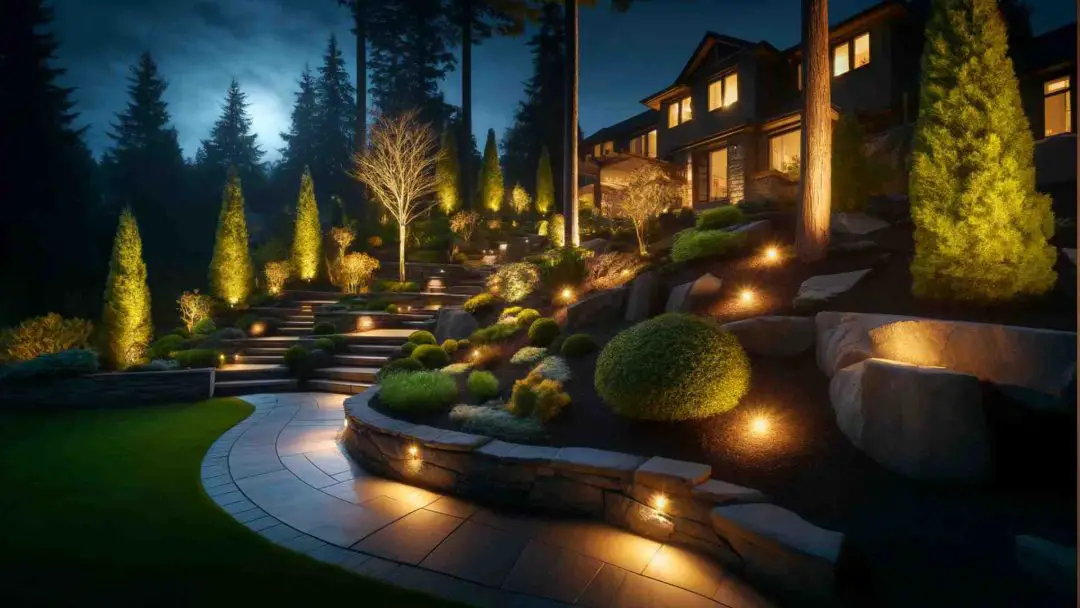
If you’re working with a sloped yard that has retaining walls or multiple levels, terraced lighting might just be your best friend. By installing lights along the edges of each terrace, you can create a beautifully layered effect that brings both charm and practicality to your outdoor space.
This type of lighting is perfect for sloped yards because it clearly defines each level, giving your landscape a structured, intentional look. Not to mention, it makes moving up and down the yard much safer by lighting up each step or incline after the sun goes down.
Terraced lighting also does a great job of showcasing the architecture of your yard, whether it’s highlighting stone walls, plants, or other features. It adds depth and dimension, making the natural flow of the landscape pop, especially at night.
When it comes to lighting choices, wall lights, in-ground lights, or low-profile LEDs are excellent picks for sloped yards. These fixtures give you just the right amount of light without overpowering the natural beauty of the yard, blending seamlessly with the environment.
Practical Tips for Terraced Lighting:
- Use warm-toned lights to create a cozy, inviting glow along the terraces.
- Ensure the fixtures are evenly spaced to keep the lighting uniform across each level.
- Consider using dimmable lights for flexible brightness, depending on the mood or time of night.
- Choose energy-efficient LED lights to cut down on long-term energy use and maintenance.
- Make sure your lighting is weather-resistant, especially if your terraces are exposed to rain or moisture.
2. Uplighting for Trees and Tall Plants
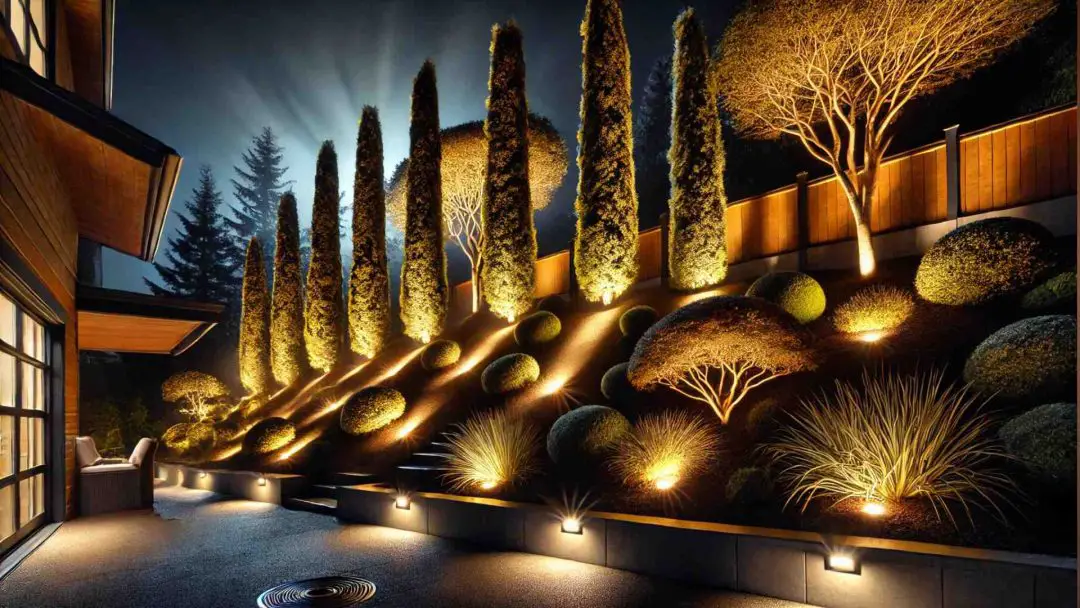
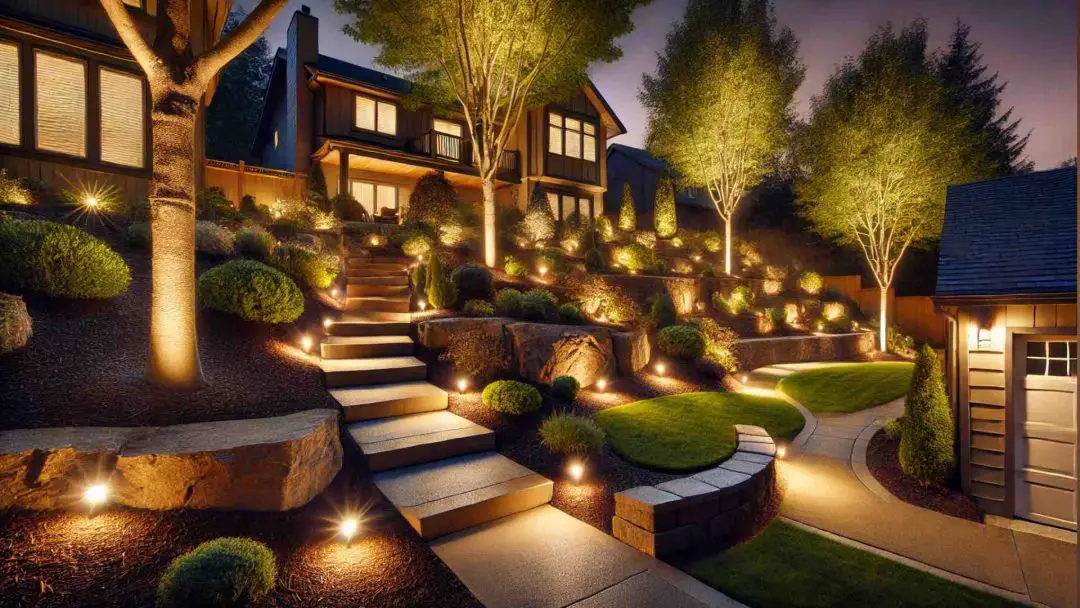
Using uplighting for trees and tall plants is a fantastic way to bring some drama and depth to a sloped yard. By placing lights at the base of trees or large shrubs, you can create a beautiful upward glow that highlights their natural structure.
This technique works perfectly for sloped yards because it draws attention to the height and vertical features of your landscape. It’s a clever way to add visual interest, making your yard feel more dynamic and layered at night.
Uplighting is also ideal for showcasing tall plants that might otherwise go unnoticed. It lets you enhance the beauty of your yard without cluttering the ground with extra fixtures or disrupting the natural flow of the slope.
The best fixtures for this job are spotlights or in-ground well lights, which provide just the right amount of brightness without overwhelming the space. These subtle lights will put your trees and plants in the spotlight, giving them the attention they deserve.
Practical Tips for Uplighting Trees and Tall Plants:
- Position the lights at an angle to create a soft, natural glow without harsh shadows.
- Use warm white bulbs to enhance the color and texture of the plants, making them stand out beautifully at night.
- Space the lights evenly along the slope for a balanced and cohesive effect.
- Consider using timers or smart controls to adjust the lighting based on the time of day or ambiance you want to create.
- Choose energy-efficient LED lights to save on energy costs and minimize maintenance needs.
3. Path Lighting Along the Slope
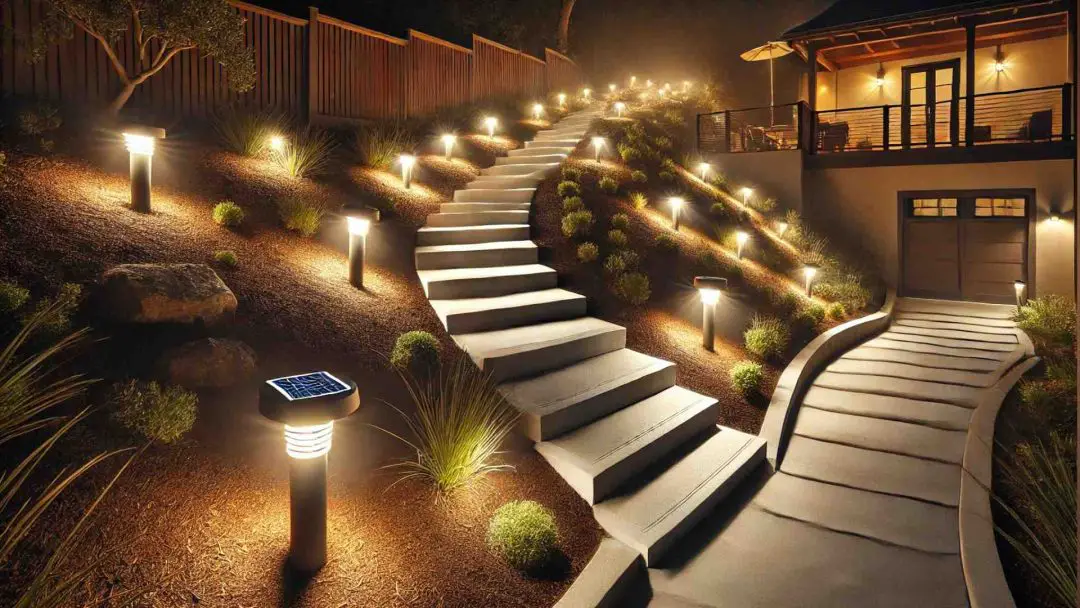
Placing path lights along a sloped yard is a great way to combine safety and style. By illuminating sloped pathways or stairs, you guide visitors while adding a subtle touch of elegance to your outdoor space.
This approach works because it seamlessly blends practicality with aesthetics. The lights make sure that uneven ground or steps are easy to see at night, without taking away from the natural beauty of your yard.
Path lighting also helps define the flow of your yard, making it simple for guests to navigate after dark. It provides just the right amount of light to highlight pathways and steps while keeping the overall atmosphere soft and inviting.
When it comes to fixtures, solar path lights, stake lights, or bollard lights are perfect for this job. They’re easy to install, energy-efficient, and offer enough brightness to keep things safe without overpowering the landscape.
Practical Tips for Path Lighting:
- Space the lights evenly to create a consistent and well-balanced effect.
- Use solar-powered lights to avoid complex wiring and keep energy costs down.
- Choose warm-toned lights to keep the atmosphere cozy and natural.
- Stagger lights on alternating sides of the path for a more dynamic look.
- Pick weather-resistant fixtures to ensure they hold up against rain and water runoff on the slope.


4. Downlighting for Soft Illumination
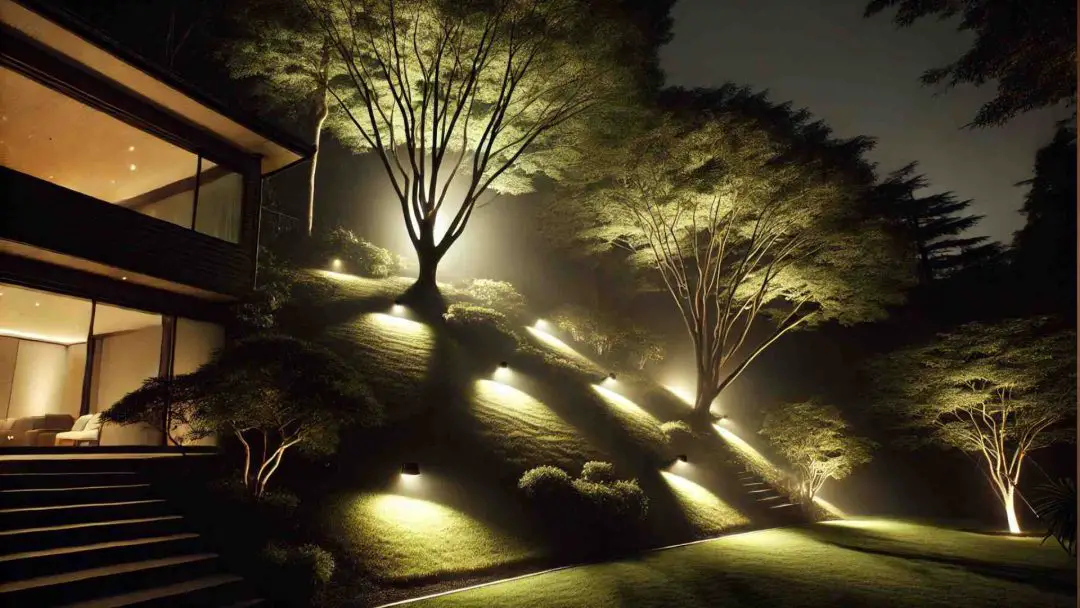
Downlighting is a great way to softly light up large sections of a sloped yard without creating any harsh shadows. By placing lights high up in trees or on poles, you can cast a gentle, ambient glow that feels just like natural moonlight.
This method works because it covers a wide area while keeping the atmosphere calm and inviting. The light spreads evenly, enhancing the natural beauty of your yard without overpowering it.
Another benefit of downlighting is the peaceful, relaxed vibe it creates, making it perfect for those quiet evenings outdoors. It offers just enough illumination to keep the yard feeling safe and cozy, without putting too much focus on the lights themselves.
For the best effect, tree-mounted lights or high-mounted LED fixtures are ideal. These lights sit high enough to cast a soft, moonlit glow over a larger area, while staying subtle and out of sight.
Practical Tips for Downlighting:
- Mount the lights high to ensure broader coverage with a soft, even glow.
- Angle the fixtures downward to reduce glare and maintain a natural-looking light.
- Opt for dimmable LED lights so you can adjust the brightness to suit the mood.
- Use warm-toned bulbs to create a cozy and inviting ambiance.
- Choose weather-resistant fixtures, especially for lights installed in trees or outdoor poles.
5. Accent Lighting for Rock Features or Waterfalls
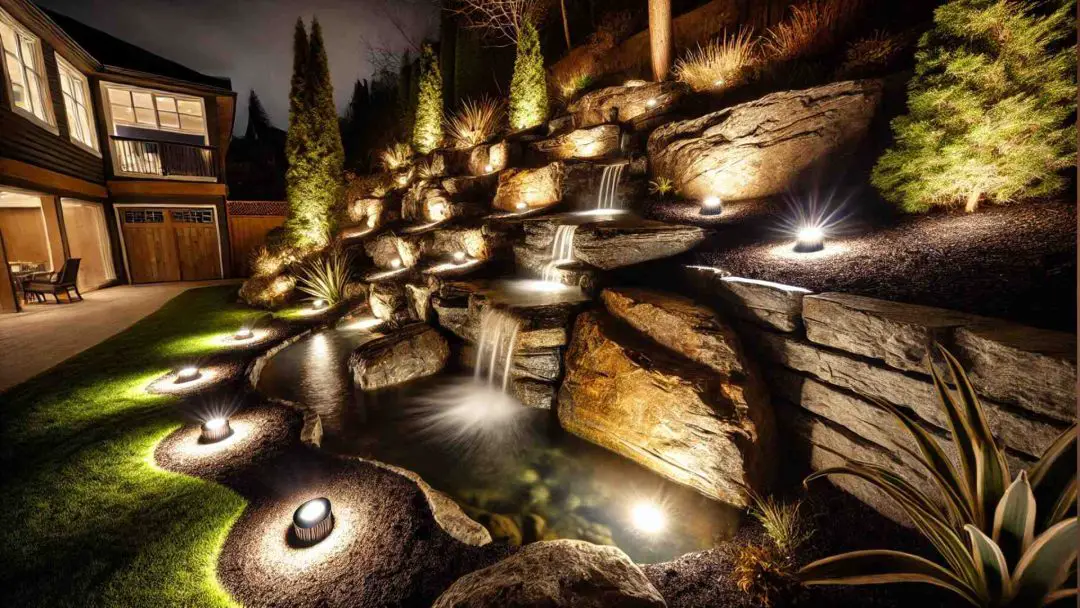
When you want to highlight the standout features of a sloped yard, accent lighting is the way to go. By placing lights around natural rock formations, water features, or unique plants, you can bring them into focus and add some flair to your outdoor space.
This technique works especially well on sloped yards because it breaks up the visual monotony of an incline. By drawing attention to specific elements, like a waterfall or a striking rock feature, you create a more engaging and layered landscape.
What’s great about accent lighting is that it lets you shine a spotlight on certain features without overpowering the entire slope with light. Whether it’s highlighting a beautiful plant or creating a dramatic effect on rocks, it adds a little something extra without going overboard.
For the best results, LED accent lights, submersible lights for water features, or low-voltage spotlights are ideal. These lights are versatile and energy-efficient, allowing you to direct the light exactly where you need it while keeping things subtle and stylish.
Practical Tips for Accent Lighting:
- Focus on one or two key features to avoid overwhelming the slope with too many lights.
- Use submersible lights in water features to create a shimmering, magical effect.
- Position lights at an angle to create interesting shadows and depth around rocks.
- Opt for adjustable spotlights to control the intensity and direction of the light.
Illuminate Your Sloped Yard with Style and Practicality
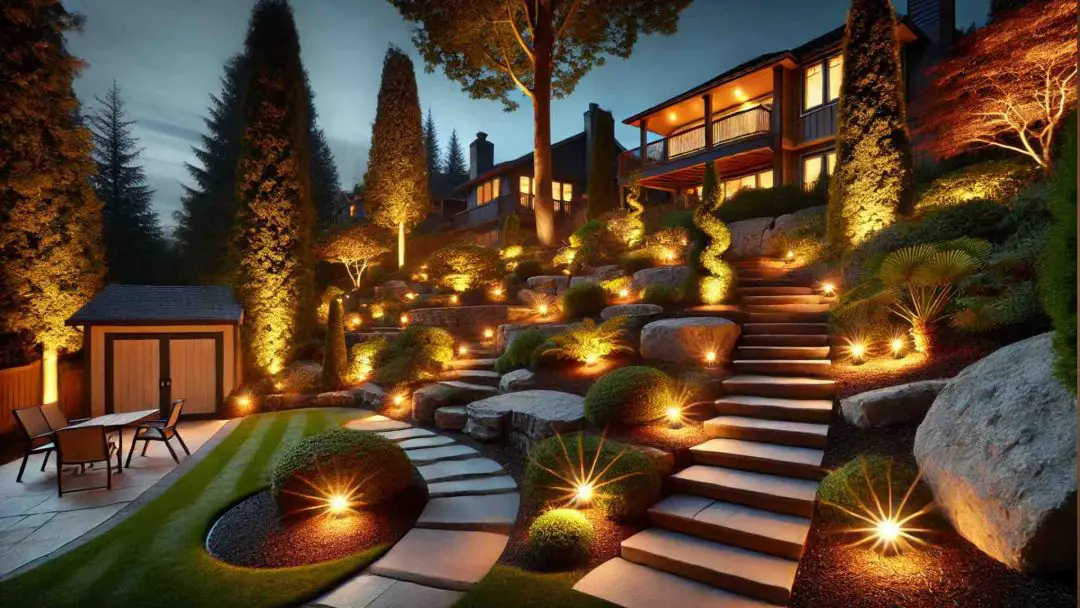
Lighting a sloped yard doesn’t have to be a daunting task. With the right ideas, you can easily transform your space into something both beautiful and functional.
Whether you’re using terraced lighting or highlighting those standout features, there are so many ways to make your yard pop. Each lighting approach brings its own touch of elegance while keeping things practical and safe.
So, whether it’s guiding pathways, adding a soft glow to trees, or spotlighting unique elements, you can strike a perfect balance between style and usability. With a little planning, your sloped yard will shine bright and become a space you’ll enjoy day and night.