There’s something satisfying about seeing a well-lit yard at night—it just feels right. Whether it’s the soft glow guiding you down a path or the warm light wrapping your porch in a cozy hug, outdoor lights can do a lot for a space. But once you start adding more than one kind, things can get a little tricky.
One light looks charming. Three lights, thoughtfully placed, can be magical. But throw in five or six without a plan, and suddenly your backyard feels like a confused spotlight audition.
Today, we’re talking about the dos and don’ts of combining multiple outdoor lights. Because with the right balance, your yard won’t just be lit—it’ll be inviting.
Why Combine Multiple Outdoor Lights?

Using just one type of outdoor light might seem easier, but it usually leaves parts of your yard too dark, too bright, or just plain awkward. Mixing different kinds of lights gives you better control, better looks, and a space that actually works the way you want it to.
Here are a few solid reasons why combining outdoor lighting is worth the effort:
- It improves visibility and safety across different zones – A single porch light won’t help you spot that uneven step, the edge of the flower bed, or the toy dinosaur someone left on the path. Layered lighting—like path lights, step lights, and wall fixtures—makes it easier to move around without stubbing toes or spilling snacks.
- It boosts your home’s curb appeal – The right lighting can show off your landscaping, highlight textures on your house, and make your place feel a little more “designed.” Even simple touches, like uplighting a tree or framing your entryway with sconces, can make a big difference.
- It creates depth and makes your space more interesting – When light only comes from one angle, everything can feel flat or overly harsh. By mixing uplights, downlights, and side lighting, you give your yard more shape and personality.
- It lets you control the mood – Soft string lights or lanterns can turn a basic patio into a cozy hangout, while brighter task lighting can help with grilling or cleaning up afterward. The right combination lets you shift the atmosphere without turning everything on full blast.
- It makes your outdoor areas more usable – Whether you’re reading on the porch, hosting friends, or just letting the dog out, different lights support different activities. With a smart setup, you won’t be left fumbling around in the dark.
Types of Outdoor Lights to Combine

Not all outdoor lights are built for the same job—and that’s exactly what makes combining them so effective. When you mix the right types in the right spots, your yard feels more inviting, more useful, and a whole lot better looking.
Here’s a breakdown of the main types of lights that play well together:
- Ambient Lighting – This is your base layer—the light that softly fills the space and sets the overall tone. Wall sconces, post lights, and hanging fixtures are all great for adding a warm, welcoming glow without being too bright or harsh.
- Task Lighting – Task lighting is practical and focused, helping you see clearly when you’re doing specific things like unlocking the door or cooking outside. Step lights, motion-sensor lights, and fixtures near entryways fall into this group.
- Accent Lighting – Accent lights are all about highlighting the good stuff—your favorite tree, a cool stone wall, or a garden feature. Spotlights, uplights, and directional lights add contrast and visual interest without overwhelming the scene.
- Decorative Lighting – These lights bring personality. String lights, lanterns, and festoon lights don’t usually do much heavy lifting, but they create a fun, cozy vibe that makes people want to stick around.
- Landscape Lighting – Designed specifically for outdoor features like pathways, flower beds, and water elements, landscape lighting helps shape and guide your outdoor space. From ground-level well lights to small path lights, these fixtures quietly do their job while tying everything together.
The Dos of Combining Multiple Outdoor Lights

Mixing multiple outdoor lights can completely change the look and feel of your yard—for the better—when done right. A few smart choices and a little planning can go a long way toward creating a space that’s both stylish and practical.
To help you get the most out of your setup, here are the things you should do when combining outdoor lights:
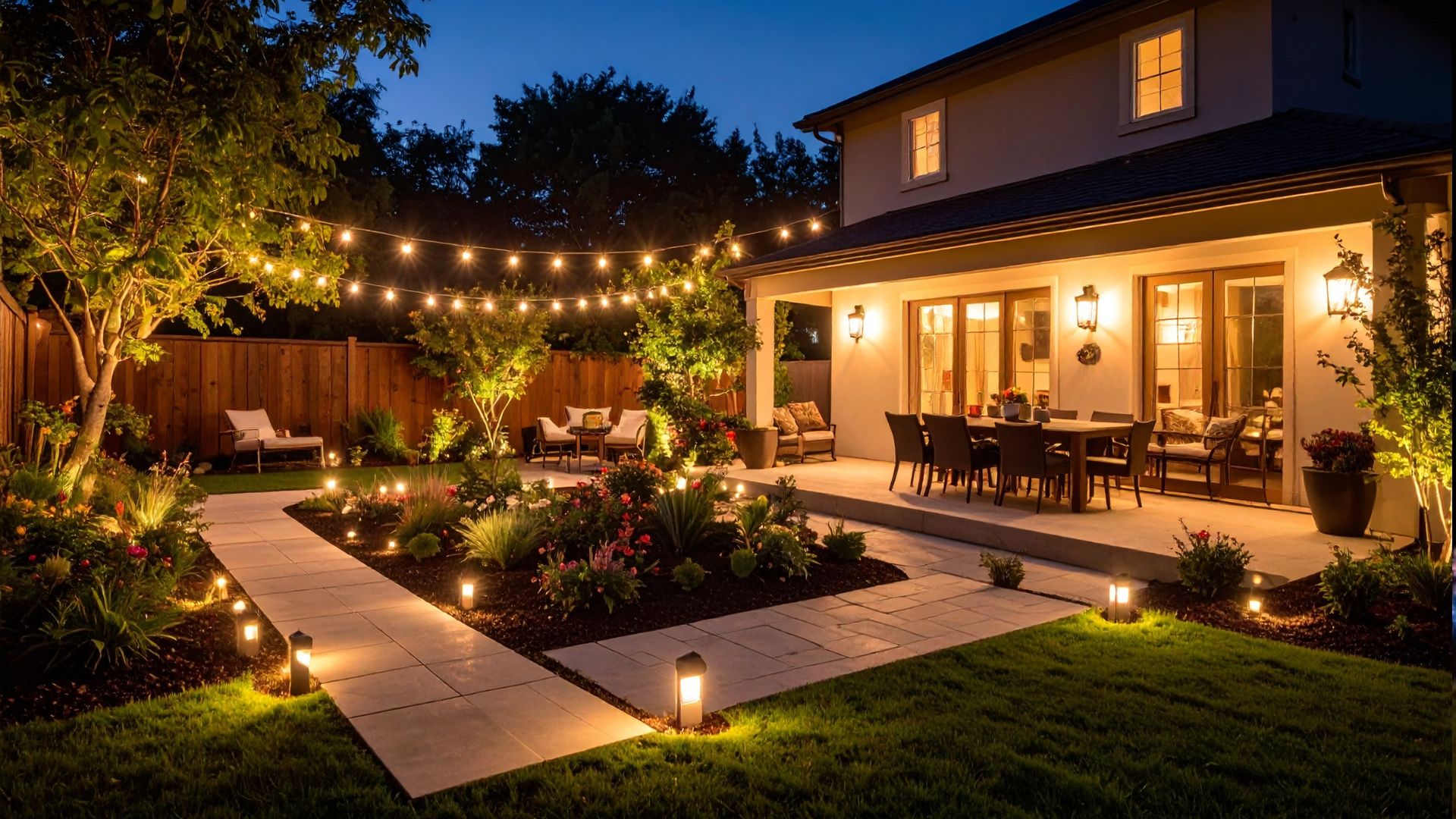
- Do layer your lighting – Combining ambient, task, and accent lighting gives your yard depth and balance, instead of one flat, overwhelming glow. It also lets you adjust different areas for different needs, whether it’s relaxing on the patio or walking safely down the steps.
- Do keep your color temperatures consistent – Stick to one color tone—typically a warm white around 2700K to 3000K—so your lights look like they belong together. Mixing warm and cool tones can feel jarring and might throw off the cozy vibe you’re going for.
- Do plan with purpose – Take the time to sketch out your space and decide where each type of light makes sense. Think about how you use your yard—what needs to be lit, when, and why—and let that guide your choices.
- Do choose fixtures that work well together visually – They don’t have to match perfectly, but they should feel like they’re part of the same family. Similar finishes or design styles help your lighting look pulled-together, not pieced together.
The Don’ts of Combining Multiple Outdoor Lights

While combining outdoor lights can take your space from ordinary to impressive, a few missteps can quickly turn things confusing, chaotic, or just plain uncomfortable.
Here are the things you shouldn’t do when layering outdoor lighting around your home:
- Don’t mix warm and cool light temperatures – Combining a warm white porch light with a cool blue spotlight on your tree creates an uneven, distracting look. Stick to a consistent color temperature range so everything feels unified, not scattered.
- Don’t cluster too many lights in one spot – When multiple fixtures overlap in the same area, it can cause harsh shadows, glare, or make the rest of your yard look oddly dim. Spread your lighting thoughtfully so each area gets just what it needs—no more, no less.
- Don’t aim all your lights in the same direction – If everything shines downward or only one way, your yard ends up looking flat and one-dimensional. Varying your angles—some up, some down, some from the side—adds depth and visual interest.
- Don’t forget to balance intensity between fixtures – Using a high-powered floodlight next to a delicate path light can throw off the entire mood and make some areas feel washed out. Choose bulbs with similar lumen levels so one fixture doesn’t overpower the rest.
- Don’t light everything equally – Not every tree, corner, or wall needs a spotlight. Let some areas breathe with softer light or even intentional shadow—it creates contrast and helps guide the eye to the parts that matter most.
- Don’t forget how your lights interact with each other – Two fixtures might look fine individually but create glare, overlap weirdly, or cancel each other out when used together. Always test your setup at night and tweak placements so the lights work as a team, not against each other.
- Don’t rely on symmetry alone – Symmetry can be beautiful, but in outdoor lighting, forcing it can lead to awkward or unnatural results. Let the landscape guide your layout—sometimes the most balanced designs aren’t perfectly even.
Tips for Creating Harmony Between Multiple Outdoor Lights

Combining different outdoor lights isn’t just about getting the technical stuff right—it’s also about how the whole setup feels when it all comes together. When your lights flow naturally from one area to the next, the space feels intentional, comfortable, and easy on the eyes.
To help your lighting design feel more connected and polished, here are a few tips worth keeping in mind:
- Give each light a clear role in the overall layout – Instead of doubling up lights in one area “just in case,” decide what each fixture is there to do—whether it’s guiding, highlighting, or setting the mood. This keeps things purposeful and avoids crowding certain zones with unnecessary fixtures.
- Think about how light moves through space – Walk the path from your front door to the back fence and imagine how your eyes will adjust along the way. Use lighting to guide the journey, with subtle transitions between brighter and softer areas.
- Use focal points to anchor your lighting – A large tree, a garden sculpture, or an architectural feature can serve as visual anchors in your yard. Lighting these thoughtfully gives the space a natural rhythm and prevents everything from competing for attention.
- Create variety in height and scale – Not all lights should sit at the same level—mixing taller fixtures like post lights with low garden or step lighting creates visual movement. This variety adds texture and keeps the design from feeling flat or repetitive.
- Repeat certain shapes or design elements throughout your setup – You don’t need perfect symmetry, but a few repeating details—like round shades, clean lines, or similar mounts—can tie the look together. These small connections help your lighting feel more like a unified system than a bunch of separate parts.
- Avoid lighting every single feature – Leaving some elements in shadow can actually make your lit areas stand out more. A little restraint adds contrast and keeps the overall effect from becoming overwhelming or too busy.
Outdoor Lighting That Works Together
Combining multiple outdoor lights is a bit like putting together a band—each piece has its role, and harmony matters. You don’t need to be a lighting expert to pull it off, but a little planning goes a long way. When each light knows its place, the whole setup feels more natural and less like a last-minute mashup.
A solid lighting design doesn’t just happen—it’s built on smart choices and small adjustments. Once everything clicks into place, your space starts to glow in all the right ways without trying too hard. And if it earns a few compliments along the way? Even better.